Thursday, October 6, 2011

Austrian Economics Forum Fall '11 #3--Competition and Monopoly

This week’s forum focused on the third chapter “Competition and Monopoly” in Kirzner’s book.  Much of the chapter was not controversial to an Austrian audience and so there wasn’t the sort of discussion surrounding it as one might expect with a larger mix of mainstream economists.

In traditional theory, economists envision a continuum in which we place “perfect competition” on one end and “monopoly” on the other.  This method of organizing our thoughts says that the most important aspect of markets is the number of firms.  On the monopoly end, there is one firm, while on the other end there are so many firms that they all face horizontal demand curves.  (As an aside, we really need to get rid of the term “perfect competition” and replace it with “perfect equilibrium,” because there is no competition in that model. It’s an equilibrium-only model.)

Kirzner completely rejects this approach to defining competitive markets.  He wants to use “competition” in the same manner that the average person uses it: as a rivalrous process.  Competition describes actions.  It is a verb.  The mainstream uses competition to describe states of markets.  It is a noun.  The result is that the mainstream cannot communicate to laymen, which Kirzner says has been a “disservice.”

With competition defined as a process, we can then apply it to the entrepreneur.  When the entrepreneur recognizes a market opportunity, he is able to act.  He applies means to achieve ends.  If others wish to use those same means, a rivalry emerges.  In a market, a bidding process arises and the one who outbids the marginal rival is able to employ those means.  It is this process that coordinates the economy.  The move toward equilibrium is an unintended consequence.  The mainstream lacks this function in that the Robbinsian maximizer does not compete.  Kirzner states

Purely Robbinsian economizing activity is never competitive; purely entrepreneurial activity always is.  In other words, I am asserting, that entrepreneurship and competitiveness are two sides of the same coin: that entrepreneurial activity is always competitive and that competitive activity is always entrepreneurial (rather than Robbinsian). (p 94)

The Robbinsian maximizer merely chooses the course according to a given framework and a given set of economic relationships.  In contrast the Kirznerian entrepreneur looks at the unseen and chooses based upon some factors that may be hidden or absent.  The entrepreneur strives for profits and does so by out-competing his rivals.  The “pure Robbinsian decision-maker is not seeking to outdistance his rivals—he is not intent on learning what opportunities they are about to available to the market in order to attempt to make available still more attractive opportunities.” (p 95)

Later (p 108) Kirzner states, “As soon as we draw the cost and revenue curves facing the firm, no matter what their shape, we have created a theoretical case in which all competitive behavior has by definition been ruled out.  What is left is neither competitive nor monopolistic (in the process sense), but a problem in allocation.”  This means that as soon as we assume the structure of the cost curves or the type of demand curves, we have transitioned away from anything competitive and entered into the world of the Robbinsian maximizer.  I think that this analysis goes too far.  In one sense I see exactly what Kirzner is attempting to draw attention to, however I do not see why a sufficiently generic supply and demand graph has to be that way.  If we follow Kirzner, then even imagining curves sends us into the maximizing world.  I think that an economist can look at a static graph and recognize that it is an imperfect representation of a dynamic process.

Kirzner then examines how competition can be limited.  “[F]or us to speak freely of a lack of competitiveness in a market process, we must be able to point to something which prevents market participants from competing. … What is it, …, which might halt the competitive process? … Competition, …, is at least potentially present so long as there exist no arbitrary impediments to entry.” (p 97)  As we can tell, there are several reservations and qualifications in his definition.  Furthermore, we doesn’t define the areas of monopoly in a positive sense, e.g., “you’ll know monopoly when….”  Instead, he defines a potential absence of competition in a negative sense and assumes that the result is monopoly.  Personally, I do not like this approach.  It seems that there is too much hedging.  Is there a reason to be overly cautious?  I do not know.

Later on (p 99), Kirzner gives us a better definition: “When we assert that purely entrepreneurial activity is always competitive, we are then asserting that with respect to purely entrepreneurial activity no possible obstacles to freedom of entry can exist.  We can see this by recalling that purely entrepreneurial activity involves no element of resource ownership. … [B]lockage of entry into a particular activity must arise from restricted access to the resources needed for that activity. … All imaginable obstacles to entry can be reduced, in basic terms, to restricted access to resources.”

To summarize Kirzner’s position, the pure entrepreneur is a metaphysical concept.  It is simply the recognition of a profit opportunity.  There is no way that we can stop a person from recognizing an opportunity.  As a result, all entrepreneurship is competitive and short of direct brain control, it is impossible to curtail this recognition.  Thus, all anti-competitive restrictions have to occur on the level of access to resources.  The restriction of access to resources is a decrease in competition.  A complete restriction is a monopoly.

We talked about the implications of these concepts.  There arise two types of monopolies: one created by a government action and one created through the sole ownership of a resource. While we agreed with the first, the group debated the second concept.

As an aside, it arose that private property is a legal restriction to the access of resources.  I therefore have a monopoly over my car.  While Kirzner does argue that monopoly “diverts the entrepreneurial-competitive process into” other markets, I know that he would not argue that we should abolish private property. (p 107)  Kirzner states, “For us monopoly means the position of a producer who is immune from the threat of other entrepreneurs’ doing what he does.” (p 106)  However, it seems that for Kirzner, monopoly is not necessarily a bad thing.  I suspect that he will cover this in more detail later in the book.

Mises argues that intervention in the market distorts the market.  When the government buys pencils, it is not disrupting the normal market process and thus this is merely a shifting in supply and demand curves.  When the government imposes rules that prevent the market from doing its job, we have permanent discoordination.  For example, a maximum price set below the market price will create a permanent shortage.  I see Kirzner using the same logic in the background of his analysis.  When a monopoly exists due to legal barriers, we see the market unable to perform its job and this is bad.  If there is a monopoly that arises from ownership, then the market curves shift and the market adjusts.

The next item that we discussed was the idea of monopoly rent.  This is the return that a monopolist gains because he is a monopolist.  It is an addition to the return on the other factors of production, in which we are including entrepreneurial profit.  We found it difficult to separate these rents from the concept of entrepreneurial profit.  Luckily, Kirzner does not use it in his welfare appraisal of the monopoly.  Instead, he uses “the speed and smoothness with which misallocations can be discovered and corrected” (p 112) as his basis of comparison.  This definition directly parallels Mises’ definition on interventionism, where the focus (for monopoly) is directed to the obstacle to entry.

We then touched on some relatively random points.  We found them thought provoking and interesting enough to comment on.

Kirzner states, “for our notion of monopoly the shape of the demand curve facing the firm is of little significance. … [T]he significance of monopoly does not relate to the theory of the firm at all. (It is because of this that the shape of the demand curve is irrelevant.)” (p 108)  The importance of this comment is that the mainstream focuses on the firm (and the industry) and the consequent shape of the curves that the firms face.  Austrians have long rejected this static view of Industrial Organization.  Instead, we focus on the competitive process, on the action, on the verb.

Kirzner has a discussion on Monopolistic Competition, in which we basically throw the concept out.  In characteristic Kirzner fashion he cannot make a strong, direct statement and instead says, “The position developed thus far in this book makes it impossible for me to accept this approving judgment on the theory of monopolistic competition.” (p 113)  More directly he states, “the theory of monopolistic competition was on balance a decidedly unfortunate episode in the history of modern economic thought.” (p 114)  The problem was, of course, the fact that when it threw out the old perfect competition model, it left out the competition (in the Austrian sense).

Kirzner then has a nice discussion (pp 115-117) on how only in disequilibrium does product differentiation exists.  There is no reason to change product quality in a world of equilibrium.

Kirzner then delivers the one-two punch to monopolistic competition:

Thus far my criticism of the monopolistic competition view of the market has charged it (a) with overlooking the simplest available explanation of such phenomena as product differentiation …, and (b) with gratuitously advancing an alternative explanation ascribing these phenomena to the presence of monopolistic elements. … The explanation provided by the theory of monopolistic competition not only fails to recognize the disequilibrium character of the phenomena it seeks to explain, it fails even as an equilibrium theory. (p 117)

Nice.

Finally Kirzner compares his concept of the entrepreneur with that of Schumpeter’s concept. They both reject the model of perfect competition.  Schumpeter does so on the grounds that entrepreneurs are disruptive to all equilibria.  They create something new which then explodes all the old economic relationships.  Kirzner does not deny that this occurs, but is merely a subset of his “alertness to hitherto unnoticed opportunities.”  The difference then rests on Kirzner’s emphasis.  He says that the primary function of the entrepreneur is to coordinate resources, the result of which is the movement towards equilibrium.  For Schumpeter, the coordination process is secondary and mundane.

The next meeting has been changed. Instead of meeting in 2 weeks (October 14th), it will convene in 3 (October 21st).  This development is unfortunate for me since that is the day that we have scheduled the trip to the hospital for the new (girl) baby’s arrival.  Since the surgery is scheduled for the morning, in theory I could make it to the afternoon meeting. (Yeah, right!)  So I will try to recruit someone to write up a summary for that session.  We’ll see.

Tuesday, September 27, 2011

$16 Muffins, A Recipe for Bad Economics

The AP posted a story where the Department of Justice paid $16 apiece for the morning muffins at a recent conference.  While the author rightly condemns the government for wasting tax money, the article takes an odd turn.  The article states,

"Which all kind of misses the most compelling issues. If you did spend $16 on a muffin, what would it look like? How would it taste? Is it even possible?"

It then goes on to say,

"The typical muffin baked in an institutional setting such as a hotel costs about 50 cents or less, not counting labor. If you go crazy extravagant and reach for the top-shelf organic flour, maybe some hand-harvested wild blueberries from Maine and fancy sugar, you're still going to max out around $1 per muffin on raw ingredients."


Talk about missing the "most compelling issue!"  The author makes a typical economic error, which should have been learned in the most basic economics class, and that point is this: the price of any good or service is determined by the interaction of supply and demand.  It is NOT determined by the price of the inputs.  If the cost of materials determined the price of anything, then no business would go out of business, ever.

Let me repeat this necessary fact: Costs do not determine price. 

Too many people simply do not understand this principle.  Too many people think that retailers simply take wholesale prices, mark them up and then viola!  Done.  If we stop to think for a moment, if this were the case, then why are there sales? 

Let's take a simple example...

You may have noticed that the price of corn is not that same as it was a few years ago. Today you might see ears of corn selling 3/$1, while just a year or two ago it was selling for 4/$1 or even 5/$1. A few years before that it may have even been 10/$1. Setting aside inflation, the grocer might tell you that the reason he raised his prices is because the wholesaler’s price has gone up. In other words, he says his costs have gone up.

In order to correctly analyze the problem, we need to look beyond the seen and think about the unseen. This technique is called Counter-Factual Reasoning. Counter Factual Reasoning is being able to compare the “seen” world with a hypothetical alternative. When we apply counter factual reasoning, we realize that we need to ask why the wholesalers’ price of corn rose. We begin the process of tracing the change in price to its root causes. After some thought, we realize that the problem is ultimately caused by an increase in demand. Corn has a wider variety of uses than just eating it on the cob. For example, it is used as a sweetener in drinks and it is also used to create ethanol for cars. With the increase in the number of uses for corn, the demand for corn rises. These competing uses each bid for the corn. The result is an increase in the demand for corn, which causes the wholesale price to rise. So while the grocer may tell you that the price is increasing because of supply reasons, the unseen fact is that it is really demand that is driving the price change.

I suppose that I cannot fault the author of the article for getting it wrong.  I see that it was just a segue to talk about expensive muffins.  But really, using economic fallacies to get to your topic, come on!  Can't we do better than that?

Saturday, September 24, 2011

Austrian Economics Forum Fall '11 #2--The Entrepreneur

This session's Austrian Economics Forum dealt with Chapter 2, "The Entrepreneur" in Israel Kirzner's book, Competition and Entrepreneurship.  We had a dozen people attend this session, in which there were three Austrian Economists with PhDs.  Additionally there was Dr. Margolis, who is a close fellow traveller, and who we are very happy to have join us each week.  (I wonder if there are many other regular Austrian discussion sessions with such a line up each time.)

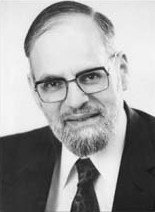
Israel M. Kirzner
The opening question centered on whether Kirzner's construction of the "pure entrepreneur" is a useful concept.  While it is obvious that Kirzner is discussing an archetype and that no such purity must exist in the real world, the central points that we were wrestling with was whether the pure entrepreneur acts and the implications derived from our conclusion.  According to Mises, acting is the application of means to achieve ends.  Kirzner's entrepreneur does not use means at all.  Kirzner states that the entrepreneurial "decision was made before the original act of purchase...." (p. 50)  He simply recognizes profit opportunities.  So Kirzner's pure entrepreneur never acts, at least in the Austrian sense.  Is a non-acting entrepreneur a fruitful concept in Austrian Economics?  The discussion group has not reached a conclusion. 

Furthermore, Kirzner argues that the pure entrepreneur receives a return for recognizing the profit opportunity.  As I understand it, Kirzner argues that after all the factor payments are paid out, there is a residual.  From that residual must be subtracted the implicit return to the entrepreneur’s use of his own money and his time, the opportunity costs of these subjective factors.  So the amount that then remains (above the opportunity costs) is the return to the pure entrepreneur.


However, my question is, "How can a non-actor earn a return?"  We speculated that the pure entrepreneur "acts" by conveying information to the resource owner.  Under the Misesian definition, this is clearly a no, but even under the normal usage of "acting" it is a stretch.  Later in the chapter, Kirzner references Mises article, "Profit and Loss."  I found this curious because in it, Mises has sa very different definition of entrepreneur.  Mises states,

"There is a simple rule of thumb to tell entrepreneurs from non-entrepreneurs. The entrepreneurs are those on whom the incidence of losses on the capital employed falls. Amateur-economists may confuse profits with other kinds of intakes. But it is impossible to fail to recognize losses on the capital employed."

A key point is that the entrepreneur acts and opens himself up to potential losses.  Where's loss for Kirzner's Entrepreneur?  Where is the possibility of entrepreneurial error?  How does this error fit into the overall picture?  Furthermore, if we are looking at the structure of the firm, where is the responsibility within the firm?  Mises would say that it is the owner/entrepreneur, but it seems that Kirzner would split those functions.  So would the ultimate responsibility fall on the decision-maker, the resource owner and not the entrepreneur?

So, if the pure entrepreneur does not act, is this a step in the wrong direction?  The Austrians have consistently argued that the entrepreneur is central to coordinating the market.  Is creating this ideal type of a non-acting entrepreneur a direction that Austrians want to take?  I am not convinced that this is a proper course for Austrians.  It is clear that this issue will continue to develop as we progress through the book.  My thoughts are that under the standard definition of action (purposeful behavior), which is typically employed by Austrians, we should reject Kirzner's pure entrepreneur.  However, I might change my mind after we finish the book.

At this point the discussion turned to why Kirzner would employ such an abstract concept.  Our conclusion is that he was trying to draw the greatest possible distinction between his construct of the entrepreneur and Lord Robbins' maximizer (RM).  (While Kirzner uses the RM for comparison, I have been thinking that perhaps we might want to use the Walrasian auctioneer instead.)  It seems that the central reason why he wants to contrast with the RM is because the RM simply reacts and crunches numbers in response to changing conditions.  So here Kirzner is arguing that the entrepreneur is better because he is discovering new conditions about potential futures.  Without this recognition of discoordinations (profit opportunities) then we could at best stumble into superior (coordinating) moves.  The exploitation of the profit opportunities moves the market (unintentionally) toward a more coordinated state.

There was some discussion of moving the economy toward some "Ultimate Equilibrium" but that was quickly rejected.  On the other hand there is a discoordinating aspect of the actions of these owner/entrepreneurs.  Schumpeter's contribution to entrepreneurship theory is that the entrepreneur is essentially a destroyer of old methods of production and a creator of new equilibria.  Kirzner downplays this aspect and focuses on the coordinating role of the entrepreneur.  Contrasting with Schumpeter, Kirzner sees the entrepreneur as a responder to and "not as a source of innovative ideas."  (p. 74)  The entrepreneur must be alert to opportunities that already exist.  Cordato pointed out that in an open universe, inventing is equilibrating (in a sense), but the actions of the entrepreneur are not always coordinating, at least not in the short-run.
 
A causal reading of Kirzner might lead one to conclude that he rejects the creative feature of entrepreneurship, but the word Kirzner uses is "emphasis."  He states, "By contrast my own treatment of the entrepreneur emphasizes the equilibrating aspects of his role." [italics added]  I do not see Kirzner as completely rejecting Schumpeter’s creative-destroyer, but simply shifting the focus to the entrepreneur’s coordinating role.

We then shifted gears to address Mises’ claim that “every actor is always an entrepreneur.” (Human Action (1949), p. 253.)  The reasoning is this, if all ends are subjectively determined and since these ends are necessarily projections of potential future states, then there is uncertainty surrounding the means to employ to achieve these ends.  With the uncertainty, we move away from the perfect knowledge of the RM in the state of (so-called) “perfect competition,” and we move into the world of the Austrians.  With this uncertainty, there is an opportunity for pure gain to come from pure entrepreneurial insight.

Margolis posed the question, "Have we lost the separation with the Robbinsian maximizer if all are entrepreneurial?"  I would have to say yes.  There are no given payoffs and production functions without Kirznerian entrepreneur.  I do not recall who said it, but a wonderful insight was made, “Means are not given, they must be perceived.”  Additionally, there is a separation between acting and reacting.  The Robbinsian maximizer is clearly reacting.  There are outside stimuli and the maximizer adjusts.  "Robbinsian decision-making ... see ends and means as data."  (p. 78 fn 34)  The Austrian conception of the owner/entrepreneur is that he enters the market with knowledge and acts upon profit opportunities.  The unintended consequence is the addition of information into the market and a higher degree of coordination. 

So now we have it straight.  The Kirznerian pure entrepreneur stands in sharp contrast to the Robbinsian Maximizer in that the RM merely reacts to outside stimuli.  The Kirznerian entrepreneur differs with the Schumpeterian entrepreneur in that the primary role of the Kirznerian version is coordinating while the other discoordinates.  The Kirznerian pure entrepreneur differs from the Misesian concept because the pure entrepreneur does not act and only perceives.  Right?

And then we come to page 84 where Kirzner says, "It is the deliberate exploitation of perceived opportunities which is essential to the entrepreneurial role."  Does this radically change Kirzner’s pure entrepreneur?  Now he acts.  That implies using means, which implies resources.  Was the pure entrepreneur a long side step?  I argued that this statement should just be thrown out.  Cordato argued that the payoff is the distinction between Robbinsian maximizer and the pure entrepreneur.  However, I think Palasek got it right.  She pointed out that he is using “entrepreneurial role” here and not concept of the pure entrepreneur.  The use of the word role does indicate that he has taken a step away from his pure entrepreneur.  I am not sure exactly where this leaves us.  Clearly, reading Kirzner is difficult.  I am hoping that more will develop along these lines in the later chapters.

I had one further observation.  The definition of the entrepreneur from the French is from entreprendre, to undertake, one who undertakes a project, or an “undertaker.”  This definition of the entrepreneur follows in the tradition of Cantillon, Turgot, Say, Menger and the Austrian School.  The mainstream tradition of Smith, Ricardo, Mill, Walras, and Marshall has tended to neglect the entrepreneur and his function.  While Kirzner is clearly emphasizing the role of entrepreneur, his definition of the pure (non-acting) entrepreneur does not fit within older the Austrian tradition.  He has broken new ground.  For this reason alone, Kirzner is worth reading.

Friday, September 9, 2011

Which Economists Show Support for Obama's Plan?

Today there was an article by Derek Kravitz on the AP which was entitled as "Economists Show Support for Obama Job-Growth Plan".  Now which economists are those?  Well, he quotes Mark Zandi of Moody's Analytics, Allen Sinai, chief economist of Decision Economics, Susan Wachter, a finance professor at the University of Pennsylvania's Wharton School, Michael Mandel, chief economic strategist for the Progressive Policy Institute, Paul Ashworth, chief U.S. economist at Capital Economics and Menzie Chinn, an economist at the University of Wisconsin.  (Personally, I have only heard of Zandi before and I think he usually has it wrong.)  Amazingly they say that more stimulus is what is needed.  Well, maybe not Mandel.  (Kravitz is not very clear on this point.)  And Ashworth says that people might just save it instead of running out and spend, spend, spending it.  (How horrible!)  However, as we see by the article's title, the whole point is to show how much economists love Obama's plan.  In fact, Chinn says that the plan doesn't go far enough.

Here's the commonality: they are all locked into the formula GDP = C + I + G + (X-M).  In other words, the size of the economy is equal to Consumption + Government Spending + Investment + Net Exports.  Of these components, they rightly see that consumption is by far the largest. 

The only problem with this approach of looking at the macroeconomy is that it is completely wrong. 

GDP is defined as the summation of all final goods and services in an economy over a certain period of time, usually a quarter or a year.  Only final goods and services are counted because we do not want to double count.  In other words, when we make a table, we don't want to count the table when we chop down the tree, and count it again when we turn it into boards, and again when we construct the table and then again when it goes to the wholesalers, and so on.  It's one table and we only want to count the one table once.  Fine.  That makes perfect sense; however most economic activity does not take place at the final stages of production.  That's the "Do you want fries with that?" stage.  Most people and most economic activity are not there. 

So what is a better approach?  The Austrian Approach is, by far, better.

We need to disaggregate the Capital Structure--The Structure of Production.  Only by viewing the economy as a process of production can we get an idea of how the economy works, and more importantly, how it grows.

The economy does not grow because people simply "demand" stuff.  Think about it.  Do you demand more than your parents, or grandparents, or people who lived 1,000 years ago?  Are we rich in the US because we simply want things more than those who came before us?  Ridiculous!  So, if it isn't demand that has caused us to be wealthy, then it must be that other thing that economists talk about--supply.

Yes, it is supply that allows us to be wealthy.  Now, let's pause as before and think about this point too.  Could it possibly be that more stuff is what allows us to have more stuff?  Duh!  Yes of course it is.  Supply has always been the limiting factor, not demand.  Thus, we need to focus our attention on production. 

In order to get out of these economic doldrums, we need to produce more.  It is only through production that we will be able to grow.  So how do we grow when starting from a depressed economy?  We need to let the costs of production fall.  We need to stop propping up prices and let them fall.  As input prices (yes, this includes wages) fall, profitability will rise.  As profitability rises, there will be more economic activity from both existing companies and new rivals.

The bottom line is that the business sector needs to cut its costs.  We could let input prices fall (commodity prices are still fairly high); we could let nominal wage rates fall; and we could reduce the costs of keeping up with rules and regulations.  Additionally, imagine how much productive energy would be released if we simply abolished the corporate income tax.  All those wasted hours converted into productive activity.  A zero corporate income tax would attract capital from all over the world to the US.  The first country to do this will be the big winner and then other countries will have to do the same to remain competitive.  Instead of implementing Frank-Dodd and ObamaCare, we should repeal these and even more regulatory burdens.  What a boon to business and the economy!  Production will grow and with it, the economy. 

And remember, consumption, jobs and prosperity are a consequence of production, they are not the reason for it.

Wednesday, September 7, 2011

Austrian Economics Forum Fall '11 #1--Competition & Entrepreneurship

We have finally kicked-off the new semester of the Austrian Economics Forum at NCSU.  About a dozen of us decided that the best thing to do at 4:30pm on a Friday afternoon was discuss Austrian Economics.  (I know that this is not normal behavior, but I still find that I have an overwhelming need to be there.)

We are reading Israel Kirzner's Competition and Entrepreneurship (1973).  There are six sessions scheduled for this semester and there are six chapters.  (That was just fortunate.)  The first chapter "Market Process versus Market Equilibrium" was this week's focus.  I found that I needed to remind myself several times that this is only the introductory chapter.  There are a number of points that need further clarification and refinement, but Kirzner doesn't (and shouldn't) go into an in depth explanation in the introductory chapter. 

The next point that I needed to remind myself was who the target audience was for Kizner.  Professor Cordato gave a brief overview of the state of the profession in 1973.  This was a time when General Equilibrium (price) theory reigned supreme and that all firms were either perfectly or imperfectly competitive.  So the target of this book is not me.  I was "raised" Austrian.  I was taught from the beginning competition is a verb and not a noun.  The target of the book is obviously not those professors who are locked into their ways.  Then who is the target?  My guess is that the targets are graduate students in economics.  They are still forming their opinions on which school is correct and will be more open-minded about the different approaches.

Kirzner sees the profession completely focused on equilibrium.  The dominant view is that we should be in equilibrium and, if reality differs from it, then there is an imperfection that needs to be studied and corrected (usually by government).  Kirzner suggests that there is an alternative.  Competition should not be studied as a state of being, for example, "the XYZ Market is in a state of perfect competition."  Rather the normal, vernacular, usage of "competition" as a rivalrous process should be adopted.  Competition is a verb and not a state of being.  Therefore, equilibrium, while an important tool, should not be the focus of the economist.  Instead the questions of "Why is there a change in prices?" and "What are the forces behind the price changes?" should dominate the economist's thinking.

Economists too often use phrases such as "market forces" to describe the market process.  "Market Forces" move the market to equilibrium.  Professor Margolis challenged the group by asking us to describe exactly what we mean by "market forces"?  He stated that we all like to tell a story that illustrates an example of market forces, but we tend to leave "market forces" as a fuzzy concept.  My thoughts are that it is shorthand for explaining how individuals have some sort of "felt uneasiness" (to use Mises' phrase) and think about how they can replace that state for a better one.  Then they act.  Within this analysis we are implicitly assuming time and ignorance (to use the title from Rizzo and O'Driscoll's book).

As buyers and sellers enter into the market they bring with them knowledge.  As the desires of the buyers confront scarcity, a price is generated and ignorance is lessened.  It is in this step-by-step manner that the market will equilibrate.  Contained in this notion is an implicit ceteris paribus assumption.  We need to realize that tastes, preferences, expectations, etc. need to be held constant.  When we (economists using this thought experiment) start to relax the ceteris paribus assumption, we are allowing supply and demand to change and thus equilibrium prices and quantities change.  Despite the fact that the equilibrium point (intersection of supply and demand curves) changes, the market forces are chasing that point around.  So while equilibrium is an important theoretical concept, we might never, ever be in equilibrium.  The important concept to focus on is that competition is always driving us toward equilibrium.

These driving forces then require the interaction of individuals with limited knowledge.  They require that this process takes time, meaning that we do not simply jump from equilibrium point to equilibrium point.  Finally, this is not an automatic or mechanical process; it requires actual people to move the market.  That person is called the entrepreneur. 

The Kirznerian pure entrepreneur is an ideal type.  This archetype has no physicality.  It is an observation of a profit opportunity.  This construction is fairly controversial within Austrian circles.  To me it seems strange to push it this far.  Without physicality, there is no action and it then falls outside of praxeology and is therefore not a market force.  (It is at this point I need to remind myself that this is the introductory chapter and there is a whole book to follow.) 

We argued about the implications of the pure entrepreneur.  A traditional manner of characterizing the Kirznerian entrepreneur is someone stumbles across money lying on the ground.  (If this is the case, then my son is a Kirznerian entrepreneur because he found 12-cents on the ground today!)  However, the act of picking up the money is a physical act and thus is not a pure entrepreneur.  After much discussion, the consensus of the group was that the pure entrepreneur is an observer and accumulates knowledge.  The action is separate and distinct.  An interesting question was raised and so I'll throw it out to you to ponder and comment...  "Is an entrepreneur only a person who finds Pareto Superior moves?"

The last issue that we discussed was the point on resource monopoly.  While he defines most monopolies are a "barrier to entry" problem, Kirzner argues that resource monopolies are "very real and significant."  In other words, a single owner of a resource can be a monopolist and this has consequences that are "very real and significant."  I disagree.  Rothbard disagrees.  In fact most of the people in the room disagreed.  (Some didn't vocalize one way or another, which was fine.)  We thought about who else (Austrian) thinks that a single resource owner is a real and significant problem, and the only one that anyone could think of is Sandy Ikeda, at SUNY - Purchase.  I like Sandy and he is usually fairly solid in his economics so I will have to ask him about this point.  Furthermore, this is still just the first chapter and there is a whole chapter on monopolies coming up and so we will see how "real and significant" this problem really is.

Unfortunately, we ran out of time and closed the meeting there.  If you are reading along (or even if you aren't) please feel free to post your comments and continue the discussion.

Friday, August 26, 2011

NC Sentences Citizens to Shortages and Misery

We are all very aware that hurricane Irene is coming to North Carolina.  As we prepare for the coming storm, the NC government has declared a state of emergency.  The effect of this declaration is that law GS 75-38 comes into full effect.

What's GS 75-38? you ask.  Good question.  It is the NC Anti-Price Gouging law.  If "the price charged by the seller exceeds the seller's average price in the preceding 60 days before the triggering event" then the seller can be fined $5,000 per violation and the injured parties can attempt redress.  Additionally, the law stays in effect for another 45 days after the "triggering event" is over.

If the hurricane does hit NC and suppose that it does knock out basic services like electricity, water, etc. then what is the best way to communicate to the rest of the economy that we are in desperate need of water, etc.?  The market uses the price mechanism to alert everyone that we need these supplies.  The price rises and screams to the world that we need water.  It shouts that we need food.  It raises a ruckus that we need generators. 

When these evil laws come into effect they completely shut off this market mechanism.  It not only cuts off the encouraging signal to entrepreneurs to send these vitally needed supplies to NC, but it actively discourages such behavior.  "If you dare go to NC, we will be watching you!"

When the price is not allowed to rise, shortages occur.  That means there is nothing left to buy at any price.  Period.  Some people think that at least the price won't be too high.  SO WHAT!  If there is nothing to buy, then who cares what the price is?  We have to shed this idea that a high price constitutes someone ripping someone else off. 

The price is a signal.  Getting mad at a high price is like getting mad at the thermometer for it being a hot day.  "How dare you get so red, thermometer.  I don't want it to be so hot!"  Ridiculus!  The price is a reflection of the scarcity of the good in question.  When the price goes up, it is because it is more scarce.  Without the high price, the goods are sold out and then there is nothing left.  These Anti-Price Gouging laws are a sentence to shortages and misery. 

Do not be fooled into thinking that the politicians are doing this to protect the "little guy."  In fact the result of this law is to make the government itself (e.g., FEMA) the major supplier of relief.  In other words, I am unable to look forward to my neighbors in Tennessee coming to my aid, instead I will have to rely on FEMA and the other bureaucratic state agencies to relieve my suffering and that of my family and neighbors.  The bottom line is that we become more dependent on the government and less on our neighbors.

The science of political economy is a powerful tool because it demands that we look beyond the stated intentions of the politicians.  It forces us to look at not just what is seen, but we need to imagine the unseen.  We are forced not to be content with looking at the intended consequences, but the unintended consequences need to be considered as well.  It is in this manner that we can find a true path to recovery and protect our liberties as well.

Real Meaning of Say's Law

Last March I gave a talk at the John Locke Foundation in Raleigh, NC.  The topic was on Say's Law.  In this interview I explain the real meaning of Say's Law and contrast it with today's Keynesian point of view.


Here is the clip from that talk last March.  (I also posted this last March.)