Showing posts with label Market Process. Show all posts

Tuesday, February 14, 2012

Austrian Economics Forum Fall '11 #5--Chapters 5 & 6

I know that this should have been written up earlier, but life intervened.  I also think that I have been dragging my feet on this entry because I was not particularly impressed with the conclusion of Kirzner's book Competition and Entrepreneurship. 

Is it heresy to say that I did not think that his book was all that great?  Of course Cordato is right when he says that the book needs to be looked at in the context of the time it was written.  However, why hasn't Kirzner released a second edition?  There have been several objections raised about Kirzner's book, so why hasn't he written the second edition to clear up some of the misunderstandings?  I would find it interesting to know if anyone has ever asked him about this.  Anyway to the book...

Chapter Five is an odd chapter.  Eleven pages into it, he says that what you just read is prelude and that we can finally get to his point and the real purpose of the chapter.  Kirzner states:

"I will show that because market phenomena frequently represent the outcomes of long chains of decisions (each one a prerequisite for the later decisions), a market process which is seen as competitive from one point of view may turn out to be monopolistic when evaluated from a different vantage point.  This highly important insight is the real purpose of this chapter, and the discussions thus far are to be viewed as introductory."  p. 198.

Then why did I just bother to read the first eleven pages?  Why not just get to the point?  One of the frustrating things about reading Kirzner, at least for me, is that he is so verbose!  Can we not write a sentence without all the hand-waving and qualifications?  Perhaps this is a product of the time he was writing.  Perhaps it is written this way because this was written in a time where these ideas were not just going against the grain, they were moving in the completely opposite direction.  Okay fine, I'll accept this argument, but still it makes the book exhausting to read.

Okay the ranting is over.

The point that he does (eventually) make is a good one.  We should reject the standard usage of Long- and Short-Runs.  Instead, we should focus on decision points.  At each decision point there is a weighing of options and opportunity costs.  The "Long-Run" then becomes a whole stream of decision points.  It occurs "earlier" in a production process.  The "Short-Run" is a decision point "later" in the production process.  Of course, the terms "earlier" and "later" are problematic.  If we are looking at a production process that is a point-input and point-output, then we can make that distinction.  If the production process is a closed, one-time, system, then we can easily see "earlier" and "later."  Unfortunately, most production processes are not like this.  Most have continuous input and continuous output production periods filled with recursive loops. 

Nevertheless, this is a step in the right direction.  When we start to focus on the nature of the decisions, then instead of talking about Long- and Short- production runs, we can look at "Decision Horizons."  A decision horizon can either be long or short.  The point is that it is the entrepreneur (and the rest of the market indirectly) who is determining the time horizon.  The time horizon is then only useful within the context of the decision.  The result is that we can basically jettison the standard terminology and focus on the contexts without all the misleading verbiage.

Chapter Six's main contribution is to drive home the point that best way to judge the "efficiency" of an economic system is by how well it brings together and incorporates information into active plans and then how well it reacts and adjusts to changes as new information is revealed.  Thus, Kirzner makes the point that the absence of coordination is "inefficiency." (See page 216.)  Perfect Knowledge assumes away this problem.  Thus Kirzner is adopting and extending Hayek's argument in "The Use of Knowledge in Society." 

So when we are to examine the welfare implications of a policy, we need not create some fanciful social utility criterion.  Instead, we look to how well information is absorbed and acted upon.  The entirety of profit and loss calculation becomes the feedback mechanism that we use as the benchmark.  Government's incorporation (of information) and feedback mechanisms are slow and imprecise by comparison.  Thus, we (Auistrian economists) have a very different approach to governmental policies to "solve" market outcomes.  Instead of having some omniscient, god-like bureaucrat standing in judgement over outcomes and adjusting players like pawns on a chess board where every move is as correct as the chalk-board allows, we look to how well does the policy absorb new information.  Then we look to see how well it adjusts as conditions, such as taste and preferences, change. 

If the welfare policy criterion was the only point to come from the book, then I would say that it is worth reading.  Luckily there are many more good points in the book. 

One last dig, I find it odd that Kirzner continuously returns to the Natural Resource Monopolist case.  I think that such a case is so rare that one cannot actually list a historical example of one.  My point is that I think that if we edit those sections out, the book would be greatly improved.  In Kirzner's defense, these are my just my opinions looking at it from a perspective from 39 years after it was written. 

Overall, it must be read by anyone who claims to be an Austrian economist.  It can be a challenge, frustrating at times, and a bit of a slog through several sections, but it frames the debate through which the Austrians approach monopoly theory, welfare theory, entrepreneurship and the role of knowledge for most of the past 40 years.  Do not just read summaries like this to understand Kirzner.  Perhaps I have missed something.  Perhaps a $20-bill-of-knowledge is just sitting there.  You may be more alert to it than I, and then, you'll be able to take advantage of your entrepreneurial acumen and show me up. 

Wednesday, November 16, 2011

The Purpose of Corporations II

Every once in a while I get a comment that can be used as a teaching tool. Here is a comment I received on my post on “The Purpose of Corporations.” It may be crossing the line of proper etiquette, but I could not help myself. I have basically gone line-by-line examining the comment. The comment is in red and my responses are below them.


I can't believe a supposed doctor wrote this.

Starting an anonymous response with an attack like this is always a sign of class.


It's so woefully shortsighted and is pretty much everything wrong about the modern economy.

Then I hope that you clearly explain how shortsightedness creates an error that encompasses the whole of the modern economy.


Is the system working as you describe right now? A resounding NO!

Actually, I agree that the current system is not working as I described it. I described how a system would work in a free market. We do not live in a free market. We live in a world permeated with government rules and regulations that tip the scales in favor of some at the expense of others. I am very much in favor in getting rid of the government’s ability to intervene in the economy. Please join me in rejecting crony capitalism and crony socialism. No more bail-outs for businesses. And no bail-outs for students either.


Profits are being made with no real resource being managed.

What does this mean? Why is a real resource needed to gain a profit? The problem with this point is the word “real,” meaning that there is a dividing line between the tangible and intangible, where only the tangible matters. This idea of an objective value is simple-minded. Providing information can be a very profitable business. Education might be considered to be a business in which no real resource is being managed, so does this mean that there are no gains to education? (Remember: Profits are the surplus of the gains over opportunity costs.)


It's profit being made off of profit itself, leeching away the value of real labor resources from the working classes. That's the problem!

The idea that value comes from the labor of the working classes is clearly a labor theory of value reference. While this theory has been smashed time and again, it keeps coming back in different incarnations--like a bad zombie film. Value does not stem from any class nor does it stem from the time or effort of the labor involved. To say otherwise is to say that the amount of time working is directly related with value or the amount of effort has a direct relationship with value. (“Directly related” in this sense means the opposite of “inversely related.”) In other words, my anonymous friend is saying that the longer one works, the more valuable the output. A watch that has 1,000 labor hours is twice as valuable as a watch made with 500 labor hours. Or “he” is saying that a watch made with twice the effort is twice as valuable as another watch.

Of course, both of these propositions are ridiculous. My students earn their grade based upon the correctness of the answer and nothing else. If one student studies twice as long or works twice as hard has no bearing on the grade received. All that matters is what is put on the answer sheet. The same is true when it comes to goods and services. It does not matter if one producer worked twice as long or twice as hard as another. All that matters is the judgment of the consumer. The value of the good is a product of the consumer’s mind and nothing else. If the consumer values the good at $5, then he will be willing to pay up to $5 for it. If the consumer values the good at $0, then the amount of time and effort of the producer is irrelevant. It is all wasted.


Prices do not simply function as pieces of information, they are extremely powerful implements of social control.

“Implements of social control?” In a sense, yes of course they are. They signal to any one who wishes to use a resource its relative scarcity. It allows the user to calculate the opportunity cost of using that resource. When the price rises, it tells the users of such resources that the resource in question is more scarce. It gets users of the resource to reduce their use, conserve. The least important uses of the resource are dispensed with first. It gets users to look for substitutes. It is in this sense that prices “control” society. But in saying this it is no more control than a red stop light saying, “Stop.” If the entrepreneur ignores the price signals, he will be out of business. If I ignore the red stop light, I will likely get into a car accident.

If fact, prices are such important signals that without them very little economic calculation could be done. Society could not exist without prices. Indeed, prices are what allow societies to exist. So I suppose that in this sense, there could be no “social” to control without prices.


Who is the consumer in a stock transaction?

The buyer of the share of stock.


The answer today is really no one, there is no person deriving use from a good that is sold. The primary "use" of stocks today is as placeholders of value -- their prices.

The owner of the share derives a dividend, a portion of the profit generated by the company serving its customers. The cash flow, the dividend, is the benefit of the stock and is the reason for its ownership. The cash flow is the return on the money saved. The money saved was invested into the company. The company combines resources to serve customers. The extent to which people trade with the company is a reflection of how well it is combining resources to meet consumers’ needs, wants and desires. And not just random or trivial needs, wants and desires, but the most intense needs, wants and desires first. The value of the company is reflected in the stock, the equity. Call it a “placeholder” if you want, it does not change its nature as the reflection of how well a specific group of people are pleasing customers.


How then does a "good" get priced when its value is its price? The answer is that it cannot be priced in any way that is beneficial to an economy, by any system that makes any sense.


Again this is naïve. Here is a quick lesson in Corporate Finance…. A firm looks into the future and must project what it will do to combine resources to meet future needs, wants and desires of its customers. It creates a pro forma statement. It looks at the projected revenues and the projected costs. It creates a projection of cash flows occurring in future periods. Then it uses its opportunity cost, the Weighted Average Cost of Capital (WACC) to discount all of those future cash flows to the present. Then it subtracts the upfront costs of the endeavor. This process yields a Net Present Value (NPV) of the project. If the NPV is positive, the endeavor should be undertaken. If the NPV is negative, the firm looks for something else. The greater the NPV, the more valuable is the company’s endeavor. As the company announces its future plans, the eyes of the world evaluate the firm’s decision. If they agree that this project adds value (or more precisely will add value) to the firm, then this increase in value is reflected in the share price of the firm. Bad decisions (in the eyes of the market) lower the price of the company. The benefit of these capital markets is merely the efficient allocation scarce resources to good decision makers and away from bad decision makers. Without profit and loss, without economic calculation, without the ability to value projects and companies, there is no ability to efficiently allocate scarce resources. The opposite of the stock market is evaluating which is a better user of resources: the DMV, the Post Office, or the Judicial System? There is no method to know. But I can easily tell you which for-profit company is a better user of resources. And I can do it at a glance. We can’t even come close with bureaucracies.


This is how the global financial system has essentially turned into a gigantic casino game. And that is not good at ALL.

The idea that the financial world is the same as a casino game is an argument by analogy and wrong on its face. There is no house. When I win a chip, someone must lose a chip. It’s all just random luck based upon probabilities. Apple Inc. was not random chance. Successful corporations are not just random luck based upon probabilities. Creating a successful company is hard work and long hours. It is being “others focused.”


You have to know what will please your customers and then constantly strive to please them. And customers are fickle. They don’t tell that they are coming to your store in advance. They just show up and you have to be ready. They don’t tell you what they are looking for, but you had better have it on your shelves. They don’t tell you what they think is a good price, but if you don’t meet their price, they walk out without a word. Running a business is hard. Being successful is harder. Going global, that’s mindboggling!


And yet, we take it for granted. I expect to walk into a Walmart at 2am in the middle of rural North Carolina and buy Kiwi 3/$1! How insane is that? We need to take the time and marvel at this economic system, which has built the highest standard of living ever known in the last 5,000 years of recorded human history. Before we tear it down and decry the free market and the role of corporations, we had better take a very close look at what it is that we intend to do away with. I absolutely know that if we tear down the market economy, we sentence ourselves to a life of future poverty. I cannot and will not sentence my children to that fate.

Thursday, October 6, 2011

Austrian Economics Forum Fall '11 #3--Competition and Monopoly

This week’s forum focused on the third chapter “Competition and Monopoly” in Kirzner’s book.  Much of the chapter was not controversial to an Austrian audience and so there wasn’t the sort of discussion surrounding it as one might expect with a larger mix of mainstream economists.

In traditional theory, economists envision a continuum in which we place “perfect competition” on one end and “monopoly” on the other.  This method of organizing our thoughts says that the most important aspect of markets is the number of firms.  On the monopoly end, there is one firm, while on the other end there are so many firms that they all face horizontal demand curves.  (As an aside, we really need to get rid of the term “perfect competition” and replace it with “perfect equilibrium,” because there is no competition in that model. It’s an equilibrium-only model.)

Kirzner completely rejects this approach to defining competitive markets.  He wants to use “competition” in the same manner that the average person uses it: as a rivalrous process.  Competition describes actions.  It is a verb.  The mainstream uses competition to describe states of markets.  It is a noun.  The result is that the mainstream cannot communicate to laymen, which Kirzner says has been a “disservice.”

With competition defined as a process, we can then apply it to the entrepreneur.  When the entrepreneur recognizes a market opportunity, he is able to act.  He applies means to achieve ends.  If others wish to use those same means, a rivalry emerges.  In a market, a bidding process arises and the one who outbids the marginal rival is able to employ those means.  It is this process that coordinates the economy.  The move toward equilibrium is an unintended consequence.  The mainstream lacks this function in that the Robbinsian maximizer does not compete.  Kirzner states

Purely Robbinsian economizing activity is never competitive; purely entrepreneurial activity always is.  In other words, I am asserting, that entrepreneurship and competitiveness are two sides of the same coin: that entrepreneurial activity is always competitive and that competitive activity is always entrepreneurial (rather than Robbinsian). (p 94)

The Robbinsian maximizer merely chooses the course according to a given framework and a given set of economic relationships.  In contrast the Kirznerian entrepreneur looks at the unseen and chooses based upon some factors that may be hidden or absent.  The entrepreneur strives for profits and does so by out-competing his rivals.  The “pure Robbinsian decision-maker is not seeking to outdistance his rivals—he is not intent on learning what opportunities they are about to available to the market in order to attempt to make available still more attractive opportunities.” (p 95)

Later (p 108) Kirzner states, “As soon as we draw the cost and revenue curves facing the firm, no matter what their shape, we have created a theoretical case in which all competitive behavior has by definition been ruled out.  What is left is neither competitive nor monopolistic (in the process sense), but a problem in allocation.”  This means that as soon as we assume the structure of the cost curves or the type of demand curves, we have transitioned away from anything competitive and entered into the world of the Robbinsian maximizer.  I think that this analysis goes too far.  In one sense I see exactly what Kirzner is attempting to draw attention to, however I do not see why a sufficiently generic supply and demand graph has to be that way.  If we follow Kirzner, then even imagining curves sends us into the maximizing world.  I think that an economist can look at a static graph and recognize that it is an imperfect representation of a dynamic process.

Kirzner then examines how competition can be limited.  “[F]or us to speak freely of a lack of competitiveness in a market process, we must be able to point to something which prevents market participants from competing. … What is it, …, which might halt the competitive process? … Competition, …, is at least potentially present so long as there exist no arbitrary impediments to entry.” (p 97)  As we can tell, there are several reservations and qualifications in his definition.  Furthermore, we doesn’t define the areas of monopoly in a positive sense, e.g., “you’ll know monopoly when….”  Instead, he defines a potential absence of competition in a negative sense and assumes that the result is monopoly.  Personally, I do not like this approach.  It seems that there is too much hedging.  Is there a reason to be overly cautious?  I do not know.

Later on (p 99), Kirzner gives us a better definition: “When we assert that purely entrepreneurial activity is always competitive, we are then asserting that with respect to purely entrepreneurial activity no possible obstacles to freedom of entry can exist.  We can see this by recalling that purely entrepreneurial activity involves no element of resource ownership. … [B]lockage of entry into a particular activity must arise from restricted access to the resources needed for that activity. … All imaginable obstacles to entry can be reduced, in basic terms, to restricted access to resources.”

To summarize Kirzner’s position, the pure entrepreneur is a metaphysical concept.  It is simply the recognition of a profit opportunity.  There is no way that we can stop a person from recognizing an opportunity.  As a result, all entrepreneurship is competitive and short of direct brain control, it is impossible to curtail this recognition.  Thus, all anti-competitive restrictions have to occur on the level of access to resources.  The restriction of access to resources is a decrease in competition.  A complete restriction is a monopoly.

We talked about the implications of these concepts.  There arise two types of monopolies: one created by a government action and one created through the sole ownership of a resource. While we agreed with the first, the group debated the second concept.

As an aside, it arose that private property is a legal restriction to the access of resources.  I therefore have a monopoly over my car.  While Kirzner does argue that monopoly “diverts the entrepreneurial-competitive process into” other markets, I know that he would not argue that we should abolish private property. (p 107)  Kirzner states, “For us monopoly means the position of a producer who is immune from the threat of other entrepreneurs’ doing what he does.” (p 106)  However, it seems that for Kirzner, monopoly is not necessarily a bad thing.  I suspect that he will cover this in more detail later in the book.

Mises argues that intervention in the market distorts the market.  When the government buys pencils, it is not disrupting the normal market process and thus this is merely a shifting in supply and demand curves.  When the government imposes rules that prevent the market from doing its job, we have permanent discoordination.  For example, a maximum price set below the market price will create a permanent shortage.  I see Kirzner using the same logic in the background of his analysis.  When a monopoly exists due to legal barriers, we see the market unable to perform its job and this is bad.  If there is a monopoly that arises from ownership, then the market curves shift and the market adjusts.

The next item that we discussed was the idea of monopoly rent.  This is the return that a monopolist gains because he is a monopolist.  It is an addition to the return on the other factors of production, in which we are including entrepreneurial profit.  We found it difficult to separate these rents from the concept of entrepreneurial profit.  Luckily, Kirzner does not use it in his welfare appraisal of the monopoly.  Instead, he uses “the speed and smoothness with which misallocations can be discovered and corrected” (p 112) as his basis of comparison.  This definition directly parallels Mises’ definition on interventionism, where the focus (for monopoly) is directed to the obstacle to entry.

We then touched on some relatively random points.  We found them thought provoking and interesting enough to comment on.

Kirzner states, “for our notion of monopoly the shape of the demand curve facing the firm is of little significance. … [T]he significance of monopoly does not relate to the theory of the firm at all. (It is because of this that the shape of the demand curve is irrelevant.)” (p 108)  The importance of this comment is that the mainstream focuses on the firm (and the industry) and the consequent shape of the curves that the firms face.  Austrians have long rejected this static view of Industrial Organization.  Instead, we focus on the competitive process, on the action, on the verb.

Kirzner has a discussion on Monopolistic Competition, in which we basically throw the concept out.  In characteristic Kirzner fashion he cannot make a strong, direct statement and instead says, “The position developed thus far in this book makes it impossible for me to accept this approving judgment on the theory of monopolistic competition.” (p 113)  More directly he states, “the theory of monopolistic competition was on balance a decidedly unfortunate episode in the history of modern economic thought.” (p 114)  The problem was, of course, the fact that when it threw out the old perfect competition model, it left out the competition (in the Austrian sense).

Kirzner then has a nice discussion (pp 115-117) on how only in disequilibrium does product differentiation exists.  There is no reason to change product quality in a world of equilibrium.

Kirzner then delivers the one-two punch to monopolistic competition:

Thus far my criticism of the monopolistic competition view of the market has charged it (a) with overlooking the simplest available explanation of such phenomena as product differentiation …, and (b) with gratuitously advancing an alternative explanation ascribing these phenomena to the presence of monopolistic elements. … The explanation provided by the theory of monopolistic competition not only fails to recognize the disequilibrium character of the phenomena it seeks to explain, it fails even as an equilibrium theory. (p 117)

Nice.

Finally Kirzner compares his concept of the entrepreneur with that of Schumpeter’s concept. They both reject the model of perfect competition.  Schumpeter does so on the grounds that entrepreneurs are disruptive to all equilibria.  They create something new which then explodes all the old economic relationships.  Kirzner does not deny that this occurs, but is merely a subset of his “alertness to hitherto unnoticed opportunities.”  The difference then rests on Kirzner’s emphasis.  He says that the primary function of the entrepreneur is to coordinate resources, the result of which is the movement towards equilibrium.  For Schumpeter, the coordination process is secondary and mundane.

The next meeting has been changed. Instead of meeting in 2 weeks (October 14th), it will convene in 3 (October 21st).  This development is unfortunate for me since that is the day that we have scheduled the trip to the hospital for the new (girl) baby’s arrival.  Since the surgery is scheduled for the morning, in theory I could make it to the afternoon meeting. (Yeah, right!)  So I will try to recruit someone to write up a summary for that session.  We’ll see.

Saturday, September 24, 2011

Austrian Economics Forum Fall '11 #2--The Entrepreneur

This session's Austrian Economics Forum dealt with Chapter 2, "The Entrepreneur" in Israel Kirzner's book, Competition and Entrepreneurship.  We had a dozen people attend this session, in which there were three Austrian Economists with PhDs.  Additionally there was Dr. Margolis, who is a close fellow traveller, and who we are very happy to have join us each week.  (I wonder if there are many other regular Austrian discussion sessions with such a line up each time.)

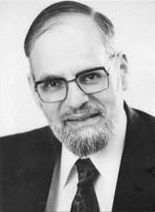
Israel M. Kirzner
The opening question centered on whether Kirzner's construction of the "pure entrepreneur" is a useful concept.  While it is obvious that Kirzner is discussing an archetype and that no such purity must exist in the real world, the central points that we were wrestling with was whether the pure entrepreneur acts and the implications derived from our conclusion.  According to Mises, acting is the application of means to achieve ends.  Kirzner's entrepreneur does not use means at all.  Kirzner states that the entrepreneurial "decision was made before the original act of purchase...." (p. 50)  He simply recognizes profit opportunities.  So Kirzner's pure entrepreneur never acts, at least in the Austrian sense.  Is a non-acting entrepreneur a fruitful concept in Austrian Economics?  The discussion group has not reached a conclusion. 

Furthermore, Kirzner argues that the pure entrepreneur receives a return for recognizing the profit opportunity.  As I understand it, Kirzner argues that after all the factor payments are paid out, there is a residual.  From that residual must be subtracted the implicit return to the entrepreneur’s use of his own money and his time, the opportunity costs of these subjective factors.  So the amount that then remains (above the opportunity costs) is the return to the pure entrepreneur.


However, my question is, "How can a non-actor earn a return?"  We speculated that the pure entrepreneur "acts" by conveying information to the resource owner.  Under the Misesian definition, this is clearly a no, but even under the normal usage of "acting" it is a stretch.  Later in the chapter, Kirzner references Mises article, "Profit and Loss."  I found this curious because in it, Mises has sa very different definition of entrepreneur.  Mises states,

"There is a simple rule of thumb to tell entrepreneurs from non-entrepreneurs. The entrepreneurs are those on whom the incidence of losses on the capital employed falls. Amateur-economists may confuse profits with other kinds of intakes. But it is impossible to fail to recognize losses on the capital employed."

A key point is that the entrepreneur acts and opens himself up to potential losses.  Where's loss for Kirzner's Entrepreneur?  Where is the possibility of entrepreneurial error?  How does this error fit into the overall picture?  Furthermore, if we are looking at the structure of the firm, where is the responsibility within the firm?  Mises would say that it is the owner/entrepreneur, but it seems that Kirzner would split those functions.  So would the ultimate responsibility fall on the decision-maker, the resource owner and not the entrepreneur?

So, if the pure entrepreneur does not act, is this a step in the wrong direction?  The Austrians have consistently argued that the entrepreneur is central to coordinating the market.  Is creating this ideal type of a non-acting entrepreneur a direction that Austrians want to take?  I am not convinced that this is a proper course for Austrians.  It is clear that this issue will continue to develop as we progress through the book.  My thoughts are that under the standard definition of action (purposeful behavior), which is typically employed by Austrians, we should reject Kirzner's pure entrepreneur.  However, I might change my mind after we finish the book.

At this point the discussion turned to why Kirzner would employ such an abstract concept.  Our conclusion is that he was trying to draw the greatest possible distinction between his construct of the entrepreneur and Lord Robbins' maximizer (RM).  (While Kirzner uses the RM for comparison, I have been thinking that perhaps we might want to use the Walrasian auctioneer instead.)  It seems that the central reason why he wants to contrast with the RM is because the RM simply reacts and crunches numbers in response to changing conditions.  So here Kirzner is arguing that the entrepreneur is better because he is discovering new conditions about potential futures.  Without this recognition of discoordinations (profit opportunities) then we could at best stumble into superior (coordinating) moves.  The exploitation of the profit opportunities moves the market (unintentionally) toward a more coordinated state.

There was some discussion of moving the economy toward some "Ultimate Equilibrium" but that was quickly rejected.  On the other hand there is a discoordinating aspect of the actions of these owner/entrepreneurs.  Schumpeter's contribution to entrepreneurship theory is that the entrepreneur is essentially a destroyer of old methods of production and a creator of new equilibria.  Kirzner downplays this aspect and focuses on the coordinating role of the entrepreneur.  Contrasting with Schumpeter, Kirzner sees the entrepreneur as a responder to and "not as a source of innovative ideas."  (p. 74)  The entrepreneur must be alert to opportunities that already exist.  Cordato pointed out that in an open universe, inventing is equilibrating (in a sense), but the actions of the entrepreneur are not always coordinating, at least not in the short-run.
 
A causal reading of Kirzner might lead one to conclude that he rejects the creative feature of entrepreneurship, but the word Kirzner uses is "emphasis."  He states, "By contrast my own treatment of the entrepreneur emphasizes the equilibrating aspects of his role." [italics added]  I do not see Kirzner as completely rejecting Schumpeter’s creative-destroyer, but simply shifting the focus to the entrepreneur’s coordinating role.

We then shifted gears to address Mises’ claim that “every actor is always an entrepreneur.” (Human Action (1949), p. 253.)  The reasoning is this, if all ends are subjectively determined and since these ends are necessarily projections of potential future states, then there is uncertainty surrounding the means to employ to achieve these ends.  With the uncertainty, we move away from the perfect knowledge of the RM in the state of (so-called) “perfect competition,” and we move into the world of the Austrians.  With this uncertainty, there is an opportunity for pure gain to come from pure entrepreneurial insight.

Margolis posed the question, "Have we lost the separation with the Robbinsian maximizer if all are entrepreneurial?"  I would have to say yes.  There are no given payoffs and production functions without Kirznerian entrepreneur.  I do not recall who said it, but a wonderful insight was made, “Means are not given, they must be perceived.”  Additionally, there is a separation between acting and reacting.  The Robbinsian maximizer is clearly reacting.  There are outside stimuli and the maximizer adjusts.  "Robbinsian decision-making ... see ends and means as data."  (p. 78 fn 34)  The Austrian conception of the owner/entrepreneur is that he enters the market with knowledge and acts upon profit opportunities.  The unintended consequence is the addition of information into the market and a higher degree of coordination. 

So now we have it straight.  The Kirznerian pure entrepreneur stands in sharp contrast to the Robbinsian Maximizer in that the RM merely reacts to outside stimuli.  The Kirznerian entrepreneur differs with the Schumpeterian entrepreneur in that the primary role of the Kirznerian version is coordinating while the other discoordinates.  The Kirznerian pure entrepreneur differs from the Misesian concept because the pure entrepreneur does not act and only perceives.  Right?

And then we come to page 84 where Kirzner says, "It is the deliberate exploitation of perceived opportunities which is essential to the entrepreneurial role."  Does this radically change Kirzner’s pure entrepreneur?  Now he acts.  That implies using means, which implies resources.  Was the pure entrepreneur a long side step?  I argued that this statement should just be thrown out.  Cordato argued that the payoff is the distinction between Robbinsian maximizer and the pure entrepreneur.  However, I think Palasek got it right.  She pointed out that he is using “entrepreneurial role” here and not concept of the pure entrepreneur.  The use of the word role does indicate that he has taken a step away from his pure entrepreneur.  I am not sure exactly where this leaves us.  Clearly, reading Kirzner is difficult.  I am hoping that more will develop along these lines in the later chapters.

I had one further observation.  The definition of the entrepreneur from the French is from entreprendre, to undertake, one who undertakes a project, or an “undertaker.”  This definition of the entrepreneur follows in the tradition of Cantillon, Turgot, Say, Menger and the Austrian School.  The mainstream tradition of Smith, Ricardo, Mill, Walras, and Marshall has tended to neglect the entrepreneur and his function.  While Kirzner is clearly emphasizing the role of entrepreneur, his definition of the pure (non-acting) entrepreneur does not fit within older the Austrian tradition.  He has broken new ground.  For this reason alone, Kirzner is worth reading.

Wednesday, September 7, 2011

Austrian Economics Forum Fall '11 #1--Competition & Entrepreneurship

We have finally kicked-off the new semester of the Austrian Economics Forum at NCSU.  About a dozen of us decided that the best thing to do at 4:30pm on a Friday afternoon was discuss Austrian Economics.  (I know that this is not normal behavior, but I still find that I have an overwhelming need to be there.)

We are reading Israel Kirzner's Competition and Entrepreneurship (1973).  There are six sessions scheduled for this semester and there are six chapters.  (That was just fortunate.)  The first chapter "Market Process versus Market Equilibrium" was this week's focus.  I found that I needed to remind myself several times that this is only the introductory chapter.  There are a number of points that need further clarification and refinement, but Kirzner doesn't (and shouldn't) go into an in depth explanation in the introductory chapter. 

The next point that I needed to remind myself was who the target audience was for Kizner.  Professor Cordato gave a brief overview of the state of the profession in 1973.  This was a time when General Equilibrium (price) theory reigned supreme and that all firms were either perfectly or imperfectly competitive.  So the target of this book is not me.  I was "raised" Austrian.  I was taught from the beginning competition is a verb and not a noun.  The target of the book is obviously not those professors who are locked into their ways.  Then who is the target?  My guess is that the targets are graduate students in economics.  They are still forming their opinions on which school is correct and will be more open-minded about the different approaches.

Kirzner sees the profession completely focused on equilibrium.  The dominant view is that we should be in equilibrium and, if reality differs from it, then there is an imperfection that needs to be studied and corrected (usually by government).  Kirzner suggests that there is an alternative.  Competition should not be studied as a state of being, for example, "the XYZ Market is in a state of perfect competition."  Rather the normal, vernacular, usage of "competition" as a rivalrous process should be adopted.  Competition is a verb and not a state of being.  Therefore, equilibrium, while an important tool, should not be the focus of the economist.  Instead the questions of "Why is there a change in prices?" and "What are the forces behind the price changes?" should dominate the economist's thinking.

Economists too often use phrases such as "market forces" to describe the market process.  "Market Forces" move the market to equilibrium.  Professor Margolis challenged the group by asking us to describe exactly what we mean by "market forces"?  He stated that we all like to tell a story that illustrates an example of market forces, but we tend to leave "market forces" as a fuzzy concept.  My thoughts are that it is shorthand for explaining how individuals have some sort of "felt uneasiness" (to use Mises' phrase) and think about how they can replace that state for a better one.  Then they act.  Within this analysis we are implicitly assuming time and ignorance (to use the title from Rizzo and O'Driscoll's book).

As buyers and sellers enter into the market they bring with them knowledge.  As the desires of the buyers confront scarcity, a price is generated and ignorance is lessened.  It is in this step-by-step manner that the market will equilibrate.  Contained in this notion is an implicit ceteris paribus assumption.  We need to realize that tastes, preferences, expectations, etc. need to be held constant.  When we (economists using this thought experiment) start to relax the ceteris paribus assumption, we are allowing supply and demand to change and thus equilibrium prices and quantities change.  Despite the fact that the equilibrium point (intersection of supply and demand curves) changes, the market forces are chasing that point around.  So while equilibrium is an important theoretical concept, we might never, ever be in equilibrium.  The important concept to focus on is that competition is always driving us toward equilibrium.

These driving forces then require the interaction of individuals with limited knowledge.  They require that this process takes time, meaning that we do not simply jump from equilibrium point to equilibrium point.  Finally, this is not an automatic or mechanical process; it requires actual people to move the market.  That person is called the entrepreneur. 

The Kirznerian pure entrepreneur is an ideal type.  This archetype has no physicality.  It is an observation of a profit opportunity.  This construction is fairly controversial within Austrian circles.  To me it seems strange to push it this far.  Without physicality, there is no action and it then falls outside of praxeology and is therefore not a market force.  (It is at this point I need to remind myself that this is the introductory chapter and there is a whole book to follow.) 

We argued about the implications of the pure entrepreneur.  A traditional manner of characterizing the Kirznerian entrepreneur is someone stumbles across money lying on the ground.  (If this is the case, then my son is a Kirznerian entrepreneur because he found 12-cents on the ground today!)  However, the act of picking up the money is a physical act and thus is not a pure entrepreneur.  After much discussion, the consensus of the group was that the pure entrepreneur is an observer and accumulates knowledge.  The action is separate and distinct.  An interesting question was raised and so I'll throw it out to you to ponder and comment...  "Is an entrepreneur only a person who finds Pareto Superior moves?"

The last issue that we discussed was the point on resource monopoly.  While he defines most monopolies are a "barrier to entry" problem, Kirzner argues that resource monopolies are "very real and significant."  In other words, a single owner of a resource can be a monopolist and this has consequences that are "very real and significant."  I disagree.  Rothbard disagrees.  In fact most of the people in the room disagreed.  (Some didn't vocalize one way or another, which was fine.)  We thought about who else (Austrian) thinks that a single resource owner is a real and significant problem, and the only one that anyone could think of is Sandy Ikeda, at SUNY - Purchase.  I like Sandy and he is usually fairly solid in his economics so I will have to ask him about this point.  Furthermore, this is still just the first chapter and there is a whole chapter on monopolies coming up and so we will see how "real and significant" this problem really is.

Unfortunately, we ran out of time and closed the meeting there.  If you are reading along (or even if you aren't) please feel free to post your comments and continue the discussion.

Thursday, November 11, 2010

Austrian Economics Forum Fall 2010 #5—MegaPost

Socialism is a failure, but why does it keep coming back? That’s the perennial question. In the latest Austrian Economics readings Group forum at NC State University, we discussed the final Hayek readings on socialism. In particular, "Socialist Calculation II: The State of the Debate (1935)" and "Socialist Calculation III: The Competitive 'Solution.'" These are chapters 8 and 9 in Individualism and Economic Order.

To Hayek, the problem that faces an economic system is one of coordination. How do individuals coordinate their actions with one another without the guidance of a central planner? And if there is a central planner, then will that system be able to incorporate all of the information necessary to not waste resources while satisfying the most intense wants and desires of the consumers? Will the people who live under a central planner still be able to choose their own consumer goods, or will goods just be rationed to them? Will workers get to choose where they work or will they simply be assigned their station in life?

Hayek begins by pointing out that the Russian experiment is a failure. The people are more impoverished than under the Czarist régime. Turning to the theoretical side of the debate, Hayek focuses on the mathematical approach to solving the production and distribution questions. In order to calculate the correct solution, the knowledge of opportunity costs is needed. More than mere “technical” knowledge is needed to run an economy. Just because we know how to build something does not answer the question of should it be built at all.

Furthermore, there is a need for the knowledge of consumer goods. Consumers’ tastes and preferences are continuously changing and the central planner, to be successful, will need some sort of feedback mechanism to incorporate the changes. Bureaucracies move too slowly to accomplish this task. The bottom line of this analysis is that the market processes the information that the central planners cannot. In order to achieve some sort of solution, consumer sovereignty has to be sacrificed. Consumers no longer can choose what they prefer; must simply take whatever goods and services that are placed before them.

In the conclusion, Hayek seems to have left the door open to the possibility of a workable socialist solution. Hayek states,

“that today we are not yet intellectually equipped to improve the working of our economic system by ‘planning’ or to solve the problem of socialist production in any other way without very considerably impairing productivity. What is lacking is not ‘experience’ but intellectual mastery of a problem which so far we have learned only to formulate but not to answer. No one would want to exclude every possibility that a solution may yet be found. But in our present state of knowledge serious doubt must remain whether such a solution can be found.”

I argued that unlike Mises, Hayek is leaving the door open. Cordato said that he thought the Hayek was being gracious towards his academic colleagues. While this may very well be the case, this is not how the debate progressed in the 1940s. The chief rivals to the Austrian challenge, like Lange, thought that Hayek was retreating from Mises’ position that socialism is impossible, even on paper.

It was at this point in our discussion that I read from an article that was published in 1948. The article, “Socialist Economics” was published by the American Economic Association in a collection of papers entitled, A Survey of Contemporary Economics. The article was written by Abram Berson, at that time he was a professor at Columbia University and earned a Ph.D. from Harvard. So his interpretation of the debate is not some fringe interpretation, it was, basically, the mainstream of the time. Furthermore, Bergson cites, not just the two articles that we read for the readings group, but he also cites “The Use of Knowledge in Society,” and Schumpeter and Mises as well.

Here is what Bergson says,

“To come finally to Mises, there are two questions to ask: What does he say and what does he mean?

“On the first question, let Mises speak for himself:”

Then there is a lengthy quote from Mises on how without private property there can be no market and no prices and then no economic calculation. Mises concludes, “Exchange relations between production goods can only be established on the basis of private ownership of the means of production.”

[back to Bergson]

“As to what Mises means, there appear to be two views. According to that which seems to have gained the wider currency, Mises’ contention is that without private ownership of, or…a free market for, the means of production, the rational evaluation of these goods for the purposes of calculating costs is ruled out conceptually. With it goes any rational economic calculation. To put the matter somewhat more sharply than is customary, let us imagine a Board of Supermen, with unlimited logical faculties, with a complete scale of values for the different consumers’ goods and present and future consumption, and detailed knowledge of production techniques. Even such a Board would be unable to evaluate rationally the means of production. In the absence of a free market for these goods, decisions on resource allocation in Mises’ view necessarily would be on a haphazard basis.

“Interpreted in this way, the argument is easily disposed of. Lange and Schumpeter, who favor this interpretation of Mises, point out correctly that the theory is refuted completely by the work of Pareto and Barone. …

“According to the other interpretation of Mises, which has the authority of Hayek, the contention is not that rational calculation if logically inconceivable under socialism but that there is no practicable way of realizing it. Imputation is theoretically possible; but, once private ownership of the means of production has been liquidated, it cannot be accomplished in practice.

“Hayek’s own thinking and that of Robbins, seems to be along these lines. Lange, who interprets the views of Hayek and Robbins as being in reality a retreat from the original position of Mises, considers that his own analysis refutes their argument…”

In the second reading, Hayek argues that it is the Socialists who have changed their arguments. And it is he who is chasing after them. Hayek states, “[I]t is surely unfair to say, as Lange does, that the critics, because they deal in a new way with the new schemes evolved to meet the original criticism, ‘have given up the essential point’ and ‘retreated to a second line of defense.’ Is this not rather a case of covering up their own retreat by creating confusion about the issue?”

So each side accuses the other of retreating and shifting the debate because of the other side’s inability to respond to the criticism. Personally, I am less interested in who shifted first. What does interest me is the shift in the debate. I agree with the first Bergson interpretation of Mises that under Mises’ analysis, socialism is unworkable, even on paper. I think that Mises’ argument that grounds itself on the fundamental foundation of socialism—communal property—is the stronger argument, because it attacks the very core of socialism. There is simply no getting around it. Either there is private property and a market that guides production or there is a central planner who controls it all.

I find it amazing that Bergson so easily dismisses the first interpretation of Mises. Bergson, Lange, Taylor, etc, all say that Mises was answer by Pareto and Barone. However, in the second reading, Hayek cites Pareto and shows that Pareto “expressly denied” the mathematical solution. Bergson obviously read this article and makes no attempt to address this point. Why?!?

I liked the second article more than several other people in the group. In section 5 of the article, we can clearly see the famous phrase “the circumstances of time and place” appear before the “Use of Knowledge” article. We also see an early sketch of the “man on the spot” concept a few paragraphs later.

One last point in the article that needs attention comes at the end of section 6. Hayek points out that under central planning there will be no improvements made. He states, “Any improvement, any adjustment, of the technique of production to changed conditions will be dependent on somebody’s capacity of convincing the SEC (Supreme Economic Council) that the commodity in question can be produced cheaper and that therefore the price ought to be lowered. Since the man with the new idea will have no possibility of establishing himself by undercutting, the new idea cannot be proved by experiment until he has convinced the SEC that his way of producing the thing is cheaper. Or, in other words, every calculation by an outsider who believes that he can do better will have to be examined and approved by the authority, which in this connection will have to take over all the functions of the entrepreneur.”

Innovation and creation will die under central planning. There is no incentive for the bureaucrat to take a risk. Bureaucrats, are by their nature, the opposite of risk-takers. They are the opposite of entrepreneurs.

For more on this debate, I found an article written by Murray Rothbard. It is found here:
http://www.lewrockwell.com/rothbard/rothbard132.html

Tuesday, September 21, 2010

Austrian Economics Forum Fall 2010 #2

It seems as though I am running a little behind in my updates for our discussion group.  At the last meeting we discussed Chapters 2 & 4 of Hayek's Individualism and Economic Order. 

The first article we covered was "Economics and Knowledge."  The article comes from a Presidential address before the London Economic Club in November 1936.  It was reprinted in Economica in 1937.  This article is significant because it is the first attempt he makes in describing the role and importance that prices play in our economy.  He addresses the question, "With the absence of a central planner, how is it that people cooperate?"  How do we coordinate our actions?  And more fundamentally, how do economists view and model this process?

Hayek focuses on what the economist assumes, and particularly, what the economist assumes the people in the economy know.  There is knowledge, data, which needs to be conveyed from one corner of the economy to the other.  Can knowledge be assumed to be "perfect" and known by all?  Hayek answers that knowledge is limited and divided.  This article sets him on the path of developing his concept of "spontaneous ordering."

There is one aside that I'd like to point out with regard to this article.  Hayek is questioning whether markets tend to equilibrate.  At the end of section 9, I think that we can see that Hayek agrees with market equilibration.  However during these years 1936-37, Ludwig Lachmann was Hayek's student at LSE.  I think that it is clear that he was influenced by this thinking and led him down the path of rejecting market equilibration.

The second article is one of Hayek's most famous articles, "The Use of Knowledge in Society."  It was published in the American Economic Review in 1945.  Here Hayek expands on his earlier question by asking,

"What is the problem we wish to solve when we try to construct a rational economic order? On certain familiar assumptions the answer is simple enough. If we possess all the relevant information, if we can start out from a given system of preferences, and if we command complete knowledge of available means, the problem which remains is purely one of logic."

Then he forcefully argues,

"This, however, is emphatically not the economic problem which society faces.  ...  The reason for this is that the 'data' from which the economic calculus starts are never for the whole society 'given' to a single mind which could work out the implications and can never be so given."

In this article, Hayek argues that knowledge is dispersed and must be that way.  He refers to the knowledge of "time and place."  There is no manner to communicate to a central planner all the knowledge that is necessary to have an efficient economy. 

There is no substitute for simply reading this very short article.  It is found here.  Nevertheless,...

The first thing that Hayek discusses is the different types of knowledge.  He says that there are scientific knowledge and the knowledge of the particular circumstances of time and place.  He argues that not all knowledge is something that can be communicated to a central planning board.  While Hayek is absolutely correct and he is not saying that he has a complete taxonomy of knowledge categories, I think that the category of tacit knowledge should also have been included in his discussion.  Tacit knowledge is the "learning-by-doing" knowledge that is easily seen in the world of art and music.

The next big thing that Hayek demonstrates is the economy of knowledge that is found in a price and that this information moves the economy.  Hayek uses an example of a Tin Mine.  Suppose that you use tin in your production process and the price of tin increases.  What do you do?  You cut back on your use of tin and look for substitutes.  But not only does the price tell the entrepreneur in which way to move, but it also tells him the magnitude.  If the price of tine goes up 3-cents, it's no big deal.  If the price of tin goes up 300%, then it is a big deal.  All of these actions are done without evening knowing what the root cause was.  The only thing that is known is that tin is relatively more scarce and the economy needs to adjust.

The next point that Hayek makes is that prices allow the individual to link himself into the greater economic order.  The price system sends to him enough information to make decisions and those decisions have effects on present and future price formation.  It is through this process that prices lead to coordination.  Paris gets fed!  How?  Through each individual, acting in his own self-interest, making decisions on what and how much to buy, and what and how much to sell, we get food to major population centers.  The best short story that illustrates this point is "I, Pencil" by Leonard Read of FEE.


Finally, I think that one of the most neglected points that Hayek makes is the fact that without prices, civilization could not exist.  Paris would starve without prices.  There is no other substitute for prices.  The Russians, under Lenin, tried it and it was a disaster.

There is no substitute for reading this article.  It's short--only 11 pages in the AER.  So get reading!

Thursday, July 15, 2010

I am Doomed

I have been told that you don’t really know anything until you experience it first hand. While this might not always be the case, it is certainly true when it comes to raising children. Is it a rewarding experience? Yes. Is it a necessary experience? Absolutely. Nevertheless, having one child is not a good indicator of how hard and time consuming raising two children can be.

During this past week, I have had a revelation. I am doomed, at least in regards to the new rationed health care system that we are soon going to enjoy. During this past week, my wife scheduled an appointment with her hairdresser. Since she is a stay-at-home Mom, I try to accommodate these outings as best I can. So I got to play Mr. Mom at home. In fact, it started out rather nicely. The wife dropped the boy off at his half-day preschool, so it was just me and the three-year old girl for the morning. Breakfast, playing, reading, lunch all went smoothly.

Then the carpool brings the boy home. However, he is sporting a fashionable band-aid on his hand. Apparently, at preschool, he was running, fell into the mulch and embedded a 0.5 – 0.75 inch splinter in his palm. It looked like it was removed, but I couldn’t really tell. So while he had his lunch, I called the injury expert—my Mom. After lunch and an inspection by Grandma, it was determined that a call to the pediatrician was necessary.

So I called and got a message that they were out to lunch until 2pm. I then impatiently waited an hour and called again. Shortly after 2pm, I got through and talked to a machine. After not pressing numbers 1-8, I got a person who then said that the next available appointment was at 4:50pm. From a larger perspective, I suppose that this is perfectly reasonable, but I have discovered that I am not very good at waiting. I am a fairly impatient person when it comes to the service industry. All I could think of was that this appointment was about three hours away.

And then it struck me, I am doomed when socialized medicine becomes reality. The most distinguishing feature of socialized health care is the incredible amount of waiting one has to do.

You see, scarce resources need to be rationed. There are so many people that want the services and there is less than that available. If there were more available than people wanted, then the resource wouldn’t be economically scarce; it would be a free good. The economic question that arises is how do we divvy up the resources to the people who want them? There are a number of methods to do this distribution: according to need; first come, first served; a lottery; by force; according to merit; or by the market.

With the sole exception of the market, all of these methods ignore supply incentives. In other words, when there is an increase in demand none of these, except for the market solution, will communicate to the producers that more is needed and reward those who produce that extra amount. The non-market methods of distributing goods and services translate an increase in demand into an increase in non-pecuniary costs, like, for example, standing in line. Instead of creating more health care services, the lines just get longer and longer.

So I suppose that I should be thankful that I was able to schedule an appointment for the same day. I think that in the not too distant future, I will be able to think back nostalgically and think, “Do you remember when you could call a doctor’s office and make an appointment for that same day, instead of days (weeks, months, whatever) later like we have today?”

What I do know is that I will not be able to skirt the system. My wife will have to take charge of this as well. She has the comparative advantage when it comes to bribery. She lived in Eastern Europe that had freshly thrown off the yolk of communism. While they were striving for freedom, there were several industries that had not been completely adjusted to the market.

Here is the story that she likes to tell… She was skiing, hurt her neck and decided, later, that she needed to see a doctor. Making an appointment in the official manner would have taken months. So some of her friends, had friends who knew people, who set up an appointment for her. It required a bribe—coffee. Apparently, coffee was rare and expensive at this time. However you can’t do what I would have done and say, “Here’s your bribe, may I now see the doctor?” No, that wouldn’t do. Instead there is a whole art to bribery. What my wife was told to say was, “As I was walking to the office, I noticed this coffee in the store window and thought that you might really enjoy it, blah, blah, blah….”

So this analysis leads me to an inevitable conclusion. I have no patience to wait for health care services and I have no bribery skills. So in the coming years, when socialized health care takes over, I am doomed. Now some young entrepreneur might sense an opportunity here. How about a class on how to bribe? If my wife offered such a class, I could then send her into the work force and permanently become a stay-at-home Dad. Oh my! That might even be worse. I am so doomed.

Monday, May 3, 2010

Austrian Economics Reading Group Session 6 Spring 2010

The last two readings were Murray Rothbard’s “The Austrian Theory of Money” and O’Driscoll and Shenoy’s “Inflation, Recession, and Stagflation.”

Rothbard’s article touches upon several issues: Non-Neutral Money, Mises’ Regression Theorem, the absence of money in an ERE, future issues to explore, and the definition of money.

The non-neutrality of money is one of the most important contributions that the Austrian School has made to the field of Macroeconomics. Unfortunately, it has almost been universally ignored by the mainstream. It is easier to define neutral money and then compare non-neutral money to it. Neutral money is the idea of money having no real effects when it is injected into the economy. The neutral money theorists usually assume a magical helicopter that doubles the money supply over night. People wake up to see that they all have more money, but since everybody has double, nothing real is affected. All that happens is a doubling of prices. Non-neutral money states that such a story is not only wrong, but dangerously misleading. Money is, instead, injected into the economy at specific points and then spreads out from those injection points. The people with the new money are able to enter into the market at current prices and use the new money to bid resources away from their alternative resources. In a stepwise, sequential fashion, prices rise but not in a uniform manner. Those that get the new money first benefit and those who see prices rise, but do not have the new money lose real wealth. In other words, there is a real wealth transfer from those who get the new money last to those who get the new money first.

Mises’ Regression Theorem is the solution to what was called “The Austrian Circle.” When looking to apply marginal utility theory to money, it is noticed that people hold money, not because they use it as a good, but because it is the medium of exchange. In other words, they hold on to it because of its exchange value. Money is held because it has preexisting purchasing power. As Rothbard asks, “if the demand for, and hence the utility of, money depends on its preexisting price or purchasing power, how then can that price be explained by the demand?”

The solution is what is called The Regression Theorem. Mises argued in The Theory of Money and Credit that we need to go back to the point where this commodity money has not yet money. On the day before it was money, it had use value. Then on the next day it had both use value and exchange value. Thus there is no discontinuity as exchange value grows.

Rothbard also pointed out that in a world of perfect knowledge, there is no need for money. Some of the future issues that Rothbard suggests exploring are (1) How to return to gold; (2) free banking vs. 100% reserves; and (3) how should we really measure the money supply. It was on this last point that Rothbard’s America’s Great Depression received its most significant criticism. Obviously, this is a topic for further discussion.

The second essay presents the standard Austrian Business Cycle Theory (ABCT). While this was written in the mid-1970s, it presents the core in a comprehensive manner. Nevertheless, when considering the different areas of Austrian Economics, it is clear that the ABCT has been tremendously improved upon. There are really three levels of exposition of the ABCT today. The first is the basic story placed in the context of artificial boom leading to bust. I have done this here. Then there is the undergraduate level that is found in Roger Garrison’s Time and Money. Then there are the graduate-level articles written in the journals like The Quarterly Journal of Austrian Economics and The Review of Austrian Economics.

Overall, the NCSU Austrian Forum was good. I look forward to next semester’s line up. I am hoping that there will be more students to attend the sessions, but for me the benefit is from forcing myself to read.

Unfortunately we did not cover the text completely, but you are welcome to comment on the remaining articles in this forum.

Sunday, May 2, 2010

Austrian Economics Reading Group Session 5 Spring 2010

I have been remiss in my chronically of the Austrian Economics Reading Group for the entire month of April. We covered two readings in each session.

In the 5th session, we covered F. A. Hayek’s second chapter of Prices and Production, which can be found here (pages 223-252); and we also covered Ludwig Lachmann’s article “Complementarity and Substitution in the Theory of Capital” found in Capital, Expectations, and the Market Process, pp. 197-213, which can be found here.

Prices and Production was originally a series of four lectures that he presented at the London School of Economics. The talks were so successful that he was hired to teach economics, which he did from 1931 until 1950.

The power of the second chapter stems from the presentation of what is sometimes called “the Hayekian Triangle.” This was not the first time an economy was depicted in this fashion. Jevons and Wicksell did it before him; and Böhm-Bawerk had also described an economy as ripening stages of capital. However, Hayek's presentation was clearer and established the triangle as an appropriate tool for analyzing the macroeconomy.

The key to the structure of production, the triangle, is that there are definite stages of production. Some things need to be produced before other things can be made. (You can’t assemble a bookcase until after the tree has been cut down.) While the stages are not time specific, nor do they have to have a certain length (of time), they do establish a sequence. Thus, the economist who uses the triangle can represent distortions to the structure of production. For example, the Austrian economist can argue that during a boom, there is a malinvestment (and an over-investment) in two stages, namely the earliest and latest stages, while there is a malinvestment (and an under-investment) in the middle stages. No other economic school has such a conception. The Real Business Cycle Theorists come close, but do not rival the sophistication of the modern Austrians.

The second article might be one of most important overlooked articles in the Austrian literature. Lachmann points out that not only are capital goods substitutable, but they are more often complements. In fact, most capital arrangements consist of complementary capital goods. For example, suppose that I have an axe to cut down the tree and a truck to haul it to the saw mill. The axe and the truck are not substitutes. This point may seem obvious, and it is. However, outside of Austrian economics, capital goods are all perfect substitutes. Capital is reduced to a letter, “K,” and then is assumed to be continuous so we can take the second derivative of it.

Unfortunately, there were no Neo-Classicals who attended that session and so we all just agreed with one another. I was hoping for some debate, but alack and alas, it was not to be.

I will soon cover the last of our Austrian Economics Reading Sessions.

Monday, March 29, 2010

Austrian Economics Reading Group Session 4 Spring 2010

The NC Austrian Forum met for the fourth time this past Friday (March 26, 2010) and discussed “Equilibrium Versus Market Process,” by Israel M. Kirzner and “On the Central Concept of Austrian Economics: Market Process,” by Ludwig M. Lachmann.

There were unfortunately almost as many professors as there were students—fortunate if you’re one of the students. There were only 2 graduate students and three undergraduates. Hopefully, now that Spring Break is behind us, there will be more next time.

One of the first issues that were brought up was by Stephen Margolis. He thought a critical point was when Kirzner asks, “If no one raises or lowers price bids, how do prices rise or fall?” In the model of perfect competition, the solution is through perfect knowledge. No adjustment process is necessary because we are always in equilibrium. However, that is not the world in which we live. So then how does it get done? Without the actions of the entrepreneur, it doesn’t get done. We also looked at what several principles economics textbooks had to say and it was not encouraging.

Kirzner next draws a distinction between Robbins (Robbinsian) and Mises (Misesian) conception of economics. As Kirzner states,

“Lord Robbins defined economics as dealing with the allocative aspect of human affairs, that is, with the consequences of the circumstance that men economize by engaging in the allocation of limited resources among multiple competing ends. Mises, on the other hand, emphasized the much broader notion of purposeful human action, embracing the deliberate efforts of men to improve their positions.”

Here we see the fundamental difference: for Neo-Classicals it is a simple, static maximization problem. For Austrians on the other hand, it is the searching for means to accomplish ends through time.

For Kirzner, the entrepreneur is the key to the market moving toward equilibration. While we might not ever get to such a point in the real world, the fact that the market equilibrates allows us to engage in comparative analysis.

In the next article, Lachmann rejects this position. He argues that each transaction might coordinate one person’s plans, but at the same time it might throw another’s plans into chaos. Thus, there is no such thing as moving closer to equilibrium for there is no such thing as equilibrium outside of the static state.

In Lachmann’s words, “The market process is the outward manifestation of an unending stream of knowledge. This insight is fundamental to Austrian economics. The pattern of knowledge is continuously changing in society, a process hard to describe. Knowledge defies all attempts to treat it as a 'datum' or an object identifiable in time and space.”

While it is hard to deny such a position, it also leaves one in a state of economic nihilism. How does one conduct any comparative analysis if everything is kaleidic?

Lachmann argues, “To say that the market gradually produces a consistency among plans is to say that the divergence of expectations, on which the initial incoherence of plans rests, will gradually be turned into convergence. But to reach this conclusion we must deny the autonomous character of expectations.”

I agree that we do have to deny the autonomous character of expectations. I think that expectations are shaped by experience. In a market setting, if one raises price and expects to sell more units, then that person will not be in business for too long. The nature of our expectations is shaped by how the market works. Expectations cannot be random and to the extent that Lachmann means this, he is wrong.

What do you think?

On a separate note, the NC Austrian Forum decided not to cover the next two readings on Capital Theory because the readings assume some background knowledge of people and issues. As a result, the two readings for next week will instead be: F. A. Hayek, (1935) “The Conditions of Equilibrium between the Production of Consumers' Goods and the Production of Producers' Goods,” Prices and Production, 2nd edition, Lecture 2, pp. 32-68. (The pdf is for the whole book, so don't just hit "print.") The second one is, Ludwig M. Lachamann (1977) “Complementarity and Substitution in the Theory of Capital,” Capital, Expectations, and the Market Process, pp. 197-213. Again, the pdf is for the whole book, so don't just hit "print."

Then we will cover Rothbard’s article “The Austrian Theory of Money,” and O’Driscoll and Shenoy’s article “Inflation, Recession and Stagflation.” These will round out the semester and then it will be on to Fall Semester. (Wow, time has moved fast!)

Thursday, January 28, 2010

Hayek vs. Keynes: "Fear the Boom and Bust"

This is a very nicely done video that, while entertaining, covers the key differences between the Austrian and Keynesian business cycle theories.