Tuesday, February 14, 2012

Austrian Economics Forum Fall '11 #5--Chapters 5 & 6

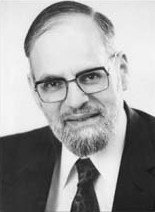
I know that this should have been written up earlier, but life intervened.  I also think that I have been dragging my feet on this entry because I was not particularly impressed with the conclusion of Kirzner's book Competition and Entrepreneurship. 

Is it heresy to say that I did not think that his book was all that great?  Of course Cordato is right when he says that the book needs to be looked at in the context of the time it was written.  However, why hasn't Kirzner released a second edition?  There have been several objections raised about Kirzner's book, so why hasn't he written the second edition to clear up some of the misunderstandings?  I would find it interesting to know if anyone has ever asked him about this.  Anyway to the book...

Chapter Five is an odd chapter.  Eleven pages into it, he says that what you just read is prelude and that we can finally get to his point and the real purpose of the chapter.  Kirzner states:

"I will show that because market phenomena frequently represent the outcomes of long chains of decisions (each one a prerequisite for the later decisions), a market process which is seen as competitive from one point of view may turn out to be monopolistic when evaluated from a different vantage point.  This highly important insight is the real purpose of this chapter, and the discussions thus far are to be viewed as introductory."  p. 198.

Then why did I just bother to read the first eleven pages?  Why not just get to the point?  One of the frustrating things about reading Kirzner, at least for me, is that he is so verbose!  Can we not write a sentence without all the hand-waving and qualifications?  Perhaps this is a product of the time he was writing.  Perhaps it is written this way because this was written in a time where these ideas were not just going against the grain, they were moving in the completely opposite direction.  Okay fine, I'll accept this argument, but still it makes the book exhausting to read.

Okay the ranting is over.

The point that he does (eventually) make is a good one.  We should reject the standard usage of Long- and Short-Runs.  Instead, we should focus on decision points.  At each decision point there is a weighing of options and opportunity costs.  The "Long-Run" then becomes a whole stream of decision points.  It occurs "earlier" in a production process.  The "Short-Run" is a decision point "later" in the production process.  Of course, the terms "earlier" and "later" are problematic.  If we are looking at a production process that is a point-input and point-output, then we can make that distinction.  If the production process is a closed, one-time, system, then we can easily see "earlier" and "later."  Unfortunately, most production processes are not like this.  Most have continuous input and continuous output production periods filled with recursive loops. 

Nevertheless, this is a step in the right direction.  When we start to focus on the nature of the decisions, then instead of talking about Long- and Short- production runs, we can look at "Decision Horizons."  A decision horizon can either be long or short.  The point is that it is the entrepreneur (and the rest of the market indirectly) who is determining the time horizon.  The time horizon is then only useful within the context of the decision.  The result is that we can basically jettison the standard terminology and focus on the contexts without all the misleading verbiage.

Chapter Six's main contribution is to drive home the point that best way to judge the "efficiency" of an economic system is by how well it brings together and incorporates information into active plans and then how well it reacts and adjusts to changes as new information is revealed.  Thus, Kirzner makes the point that the absence of coordination is "inefficiency." (See page 216.)  Perfect Knowledge assumes away this problem.  Thus Kirzner is adopting and extending Hayek's argument in "The Use of Knowledge in Society." 

So when we are to examine the welfare implications of a policy, we need not create some fanciful social utility criterion.  Instead, we look to how well information is absorbed and acted upon.  The entirety of profit and loss calculation becomes the feedback mechanism that we use as the benchmark.  Government's incorporation (of information) and feedback mechanisms are slow and imprecise by comparison.  Thus, we (Auistrian economists) have a very different approach to governmental policies to "solve" market outcomes.  Instead of having some omniscient, god-like bureaucrat standing in judgement over outcomes and adjusting players like pawns on a chess board where every move is as correct as the chalk-board allows, we look to how well does the policy absorb new information.  Then we look to see how well it adjusts as conditions, such as taste and preferences, change. 

If the welfare policy criterion was the only point to come from the book, then I would say that it is worth reading.  Luckily there are many more good points in the book. 

One last dig, I find it odd that Kirzner continuously returns to the Natural Resource Monopolist case.  I think that such a case is so rare that one cannot actually list a historical example of one.  My point is that I think that if we edit those sections out, the book would be greatly improved.  In Kirzner's defense, these are my just my opinions looking at it from a perspective from 39 years after it was written. 

Overall, it must be read by anyone who claims to be an Austrian economist.  It can be a challenge, frustrating at times, and a bit of a slog through several sections, but it frames the debate through which the Austrians approach monopoly theory, welfare theory, entrepreneurship and the role of knowledge for most of the past 40 years.  Do not just read summaries like this to understand Kirzner.  Perhaps I have missed something.  Perhaps a $20-bill-of-knowledge is just sitting there.  You may be more alert to it than I, and then, you'll be able to take advantage of your entrepreneurial acumen and show me up. 

Thursday, December 1, 2011

Austrian Economics Forum Fall '11 #4--Selling Costs, Quality and Competition

As you have noticed, I have fallen woefully behind in my commentary for the Austrian Economics Forum, The Austrian Readings Group that meets at North Carolina State University.  This was, in part, due to the birth of the third child.  Since then, my writing has dipped off a bit.  In fact, I was unable to attend the fourth session of the semester, because she was born that day.  So I asked Alex Gill, the Graduate Student who basically put together and runs the AEF, to write up a summary of what happened that session.  In his words…


This week we discussed Chapter Four, "Selling Costs, Quality, and Competition."  Kirzner spends much of the chapter arguing against i) Chamberlin’s (early) views on product quality determination and his distinction between production costs and selling costs and ii) Marshall’s (and Hicks’s) views on advertising.  Most of the chapter was non-controversial to the group since his arguments seem to follow rather directly from his notions of entrepreneurship and competition he developed thus far.  For instance, on product quality he writes:
     In the decision about which quality of product is to be produced the really significant aspect is not how to economize with given resources in attaining given ends, but the alertness with which the producer recognizes the kinds of goods consumers are eager to buy, the kinds of goods available technology and resources can create, and the kinds of resources that can be marshaled.  It is the successful identification of relevant ends and means (rather than the efficient utilization of means to achieve ends) which marks the “right” decision on product quality. (p. 139)

No surprises here.  In similar fashion, he argues that the distinction between production costs (“necessary for a particular product to be forthcoming”) and selling costs (which “alter the demand curve for that product”) is false.  We can’t discuss demand for a nonexistent product, and we can’t distinguish between actions that enhance demand and actions that change the product.  For the same reasons, it is a mistake to argue that advertising provides “a separate, distinct service” from the advertised product itself.  In the course of his argument, though, Kirzner seems to contradict himself when he explicitly concedes (p. 155) that a “substantial portion of advertising may…be viewed as providing a service quite distinct from the advertised product.” 

This statement, in fact, was the starting point for the forum’s discussion.  Kirzner’s theory states that “selling effort” does not allow the separation of information into categories based on relevance or irrelevance with regard to demand determination.  Indeed, the group could not even maintain that an individual could reliably make this distinction in his or her own mind.  When Kirzner says that “some of that information is to be considered as inseparable from the product itself,” perhaps he should have replaced the “some” with “all.”  After brief digressions on the relative merits of Kirzner and Ayn Rand’s personalities and RBC theory, we turned to page 168:

     For us, the crucial question (in evaluating the claim that advertising “monopolistically” differentiates the product in the eyes of the consumer) must always be whether the advertising activities engaged in by the differentiating “monopolist,” are or are not open also to his competitors. (p. 168)

Then can trademarks be anticompetitive?  Not if the trademark is viewed as a contract between the producer and the consumer and competitors are allowed to form their own trademarks.  In a sense, a trademark monopolizes a particular logo, but it also conveys information to the consumer.  A producer who uses another’s trademark is engaging in fraud and misrepresenting the origin of a product.

As would be expected at a gathering like this, the conversation then turned to intellectual property issues in general. 

I was able to attend the last two AEF meetings and will write up and post those after I finish grading Final Exams!

Wednesday, November 16, 2011

The Purpose of Corporations II

Every once in a while I get a comment that can be used as a teaching tool. Here is a comment I received on my post on “The Purpose of Corporations.” It may be crossing the line of proper etiquette, but I could not help myself. I have basically gone line-by-line examining the comment. The comment is in red and my responses are below them.


I can't believe a supposed doctor wrote this.

Starting an anonymous response with an attack like this is always a sign of class.


It's so woefully shortsighted and is pretty much everything wrong about the modern economy.

Then I hope that you clearly explain how shortsightedness creates an error that encompasses the whole of the modern economy.


Is the system working as you describe right now? A resounding NO!

Actually, I agree that the current system is not working as I described it. I described how a system would work in a free market. We do not live in a free market. We live in a world permeated with government rules and regulations that tip the scales in favor of some at the expense of others. I am very much in favor in getting rid of the government’s ability to intervene in the economy. Please join me in rejecting crony capitalism and crony socialism. No more bail-outs for businesses. And no bail-outs for students either.


Profits are being made with no real resource being managed.

What does this mean? Why is a real resource needed to gain a profit? The problem with this point is the word “real,” meaning that there is a dividing line between the tangible and intangible, where only the tangible matters. This idea of an objective value is simple-minded. Providing information can be a very profitable business. Education might be considered to be a business in which no real resource is being managed, so does this mean that there are no gains to education? (Remember: Profits are the surplus of the gains over opportunity costs.)


It's profit being made off of profit itself, leeching away the value of real labor resources from the working classes. That's the problem!

The idea that value comes from the labor of the working classes is clearly a labor theory of value reference. While this theory has been smashed time and again, it keeps coming back in different incarnations--like a bad zombie film. Value does not stem from any class nor does it stem from the time or effort of the labor involved. To say otherwise is to say that the amount of time working is directly related with value or the amount of effort has a direct relationship with value. (“Directly related” in this sense means the opposite of “inversely related.”) In other words, my anonymous friend is saying that the longer one works, the more valuable the output. A watch that has 1,000 labor hours is twice as valuable as a watch made with 500 labor hours. Or “he” is saying that a watch made with twice the effort is twice as valuable as another watch.

Of course, both of these propositions are ridiculous. My students earn their grade based upon the correctness of the answer and nothing else. If one student studies twice as long or works twice as hard has no bearing on the grade received. All that matters is what is put on the answer sheet. The same is true when it comes to goods and services. It does not matter if one producer worked twice as long or twice as hard as another. All that matters is the judgment of the consumer. The value of the good is a product of the consumer’s mind and nothing else. If the consumer values the good at $5, then he will be willing to pay up to $5 for it. If the consumer values the good at $0, then the amount of time and effort of the producer is irrelevant. It is all wasted.


Prices do not simply function as pieces of information, they are extremely powerful implements of social control.

“Implements of social control?” In a sense, yes of course they are. They signal to any one who wishes to use a resource its relative scarcity. It allows the user to calculate the opportunity cost of using that resource. When the price rises, it tells the users of such resources that the resource in question is more scarce. It gets users of the resource to reduce their use, conserve. The least important uses of the resource are dispensed with first. It gets users to look for substitutes. It is in this sense that prices “control” society. But in saying this it is no more control than a red stop light saying, “Stop.” If the entrepreneur ignores the price signals, he will be out of business. If I ignore the red stop light, I will likely get into a car accident.

If fact, prices are such important signals that without them very little economic calculation could be done. Society could not exist without prices. Indeed, prices are what allow societies to exist. So I suppose that in this sense, there could be no “social” to control without prices.


Who is the consumer in a stock transaction?

The buyer of the share of stock.


The answer today is really no one, there is no person deriving use from a good that is sold. The primary "use" of stocks today is as placeholders of value -- their prices.

The owner of the share derives a dividend, a portion of the profit generated by the company serving its customers. The cash flow, the dividend, is the benefit of the stock and is the reason for its ownership. The cash flow is the return on the money saved. The money saved was invested into the company. The company combines resources to serve customers. The extent to which people trade with the company is a reflection of how well it is combining resources to meet consumers’ needs, wants and desires. And not just random or trivial needs, wants and desires, but the most intense needs, wants and desires first. The value of the company is reflected in the stock, the equity. Call it a “placeholder” if you want, it does not change its nature as the reflection of how well a specific group of people are pleasing customers.


How then does a "good" get priced when its value is its price? The answer is that it cannot be priced in any way that is beneficial to an economy, by any system that makes any sense.


Again this is naïve. Here is a quick lesson in Corporate Finance…. A firm looks into the future and must project what it will do to combine resources to meet future needs, wants and desires of its customers. It creates a pro forma statement. It looks at the projected revenues and the projected costs. It creates a projection of cash flows occurring in future periods. Then it uses its opportunity cost, the Weighted Average Cost of Capital (WACC) to discount all of those future cash flows to the present. Then it subtracts the upfront costs of the endeavor. This process yields a Net Present Value (NPV) of the project. If the NPV is positive, the endeavor should be undertaken. If the NPV is negative, the firm looks for something else. The greater the NPV, the more valuable is the company’s endeavor. As the company announces its future plans, the eyes of the world evaluate the firm’s decision. If they agree that this project adds value (or more precisely will add value) to the firm, then this increase in value is reflected in the share price of the firm. Bad decisions (in the eyes of the market) lower the price of the company. The benefit of these capital markets is merely the efficient allocation scarce resources to good decision makers and away from bad decision makers. Without profit and loss, without economic calculation, without the ability to value projects and companies, there is no ability to efficiently allocate scarce resources. The opposite of the stock market is evaluating which is a better user of resources: the DMV, the Post Office, or the Judicial System? There is no method to know. But I can easily tell you which for-profit company is a better user of resources. And I can do it at a glance. We can’t even come close with bureaucracies.


This is how the global financial system has essentially turned into a gigantic casino game. And that is not good at ALL.

The idea that the financial world is the same as a casino game is an argument by analogy and wrong on its face. There is no house. When I win a chip, someone must lose a chip. It’s all just random luck based upon probabilities. Apple Inc. was not random chance. Successful corporations are not just random luck based upon probabilities. Creating a successful company is hard work and long hours. It is being “others focused.”


You have to know what will please your customers and then constantly strive to please them. And customers are fickle. They don’t tell that they are coming to your store in advance. They just show up and you have to be ready. They don’t tell you what they are looking for, but you had better have it on your shelves. They don’t tell you what they think is a good price, but if you don’t meet their price, they walk out without a word. Running a business is hard. Being successful is harder. Going global, that’s mindboggling!


And yet, we take it for granted. I expect to walk into a Walmart at 2am in the middle of rural North Carolina and buy Kiwi 3/$1! How insane is that? We need to take the time and marvel at this economic system, which has built the highest standard of living ever known in the last 5,000 years of recorded human history. Before we tear it down and decry the free market and the role of corporations, we had better take a very close look at what it is that we intend to do away with. I absolutely know that if we tear down the market economy, we sentence ourselves to a life of future poverty. I cannot and will not sentence my children to that fate.

Saturday, November 12, 2011

New Posts?

If you have noticed that there have not been any new posts in quite some time, you are correct.  It has been a busy time and I have fallen woefully behind. 

At the top of the distraction list is the birth of my third child (girl).  She is doing fine, but sleep has become something of a rare commodity in the household. 

Additionally, I have completely changed my approach to my Money and Banking class this semester.  I decided to use Rothbard's The Mystery of Banking as the primary text and the regular textbook as the secondary source.  I think that this experiment has been wildly successful.  The students are enjoying the class, and they are actually reading the book!  I asked one student if he managed to read Chapter 7.  He said that not only did he finish Chapter 7, but that he was reading ahead and was now starting Chapter 13!  It's even more amazing when its realized that we don't have economics majors at Mount Olive College!  The downside of all of this is that the class is a "new prep" and has been a major consumer of my time for most of this semester.

Anyway, the NCSU Austrian Readings Groups have still been continuing and I will write up and post the results of the discussions.  So there will be a #4, #5 and #6 to look forward to.

Next semester, we have agreed to open up the Readings Group.  The members of the group will get to pick a week and a topic, article, paper they are working on, etc. and present it to the group and lead the discussion.  I am looking forward to it.

As an aside, I recently finished reading Mises' Theory and History.  I have always been fearful of that book knowing that it's a book on methodology and that I could be quickly overwhelmed.  I could not have been more wrong.  In fact, I found the book very readable.  There were parts where one had to think about Mises' argument, but overall it was an enjoyable read.  I am somewhat ashamed of my earlier fears.  So note to self, never avoid reading Mises!

Thursday, October 6, 2011

Austrian Economics Forum Fall '11 #3--Competition and Monopoly

This week’s forum focused on the third chapter “Competition and Monopoly” in Kirzner’s book.  Much of the chapter was not controversial to an Austrian audience and so there wasn’t the sort of discussion surrounding it as one might expect with a larger mix of mainstream economists.

In traditional theory, economists envision a continuum in which we place “perfect competition” on one end and “monopoly” on the other.  This method of organizing our thoughts says that the most important aspect of markets is the number of firms.  On the monopoly end, there is one firm, while on the other end there are so many firms that they all face horizontal demand curves.  (As an aside, we really need to get rid of the term “perfect competition” and replace it with “perfect equilibrium,” because there is no competition in that model. It’s an equilibrium-only model.)

Kirzner completely rejects this approach to defining competitive markets.  He wants to use “competition” in the same manner that the average person uses it: as a rivalrous process.  Competition describes actions.  It is a verb.  The mainstream uses competition to describe states of markets.  It is a noun.  The result is that the mainstream cannot communicate to laymen, which Kirzner says has been a “disservice.”

With competition defined as a process, we can then apply it to the entrepreneur.  When the entrepreneur recognizes a market opportunity, he is able to act.  He applies means to achieve ends.  If others wish to use those same means, a rivalry emerges.  In a market, a bidding process arises and the one who outbids the marginal rival is able to employ those means.  It is this process that coordinates the economy.  The move toward equilibrium is an unintended consequence.  The mainstream lacks this function in that the Robbinsian maximizer does not compete.  Kirzner states

Purely Robbinsian economizing activity is never competitive; purely entrepreneurial activity always is.  In other words, I am asserting, that entrepreneurship and competitiveness are two sides of the same coin: that entrepreneurial activity is always competitive and that competitive activity is always entrepreneurial (rather than Robbinsian). (p 94)

The Robbinsian maximizer merely chooses the course according to a given framework and a given set of economic relationships.  In contrast the Kirznerian entrepreneur looks at the unseen and chooses based upon some factors that may be hidden or absent.  The entrepreneur strives for profits and does so by out-competing his rivals.  The “pure Robbinsian decision-maker is not seeking to outdistance his rivals—he is not intent on learning what opportunities they are about to available to the market in order to attempt to make available still more attractive opportunities.” (p 95)

Later (p 108) Kirzner states, “As soon as we draw the cost and revenue curves facing the firm, no matter what their shape, we have created a theoretical case in which all competitive behavior has by definition been ruled out.  What is left is neither competitive nor monopolistic (in the process sense), but a problem in allocation.”  This means that as soon as we assume the structure of the cost curves or the type of demand curves, we have transitioned away from anything competitive and entered into the world of the Robbinsian maximizer.  I think that this analysis goes too far.  In one sense I see exactly what Kirzner is attempting to draw attention to, however I do not see why a sufficiently generic supply and demand graph has to be that way.  If we follow Kirzner, then even imagining curves sends us into the maximizing world.  I think that an economist can look at a static graph and recognize that it is an imperfect representation of a dynamic process.

Kirzner then examines how competition can be limited.  “[F]or us to speak freely of a lack of competitiveness in a market process, we must be able to point to something which prevents market participants from competing. … What is it, …, which might halt the competitive process? … Competition, …, is at least potentially present so long as there exist no arbitrary impediments to entry.” (p 97)  As we can tell, there are several reservations and qualifications in his definition.  Furthermore, we doesn’t define the areas of monopoly in a positive sense, e.g., “you’ll know monopoly when….”  Instead, he defines a potential absence of competition in a negative sense and assumes that the result is monopoly.  Personally, I do not like this approach.  It seems that there is too much hedging.  Is there a reason to be overly cautious?  I do not know.

Later on (p 99), Kirzner gives us a better definition: “When we assert that purely entrepreneurial activity is always competitive, we are then asserting that with respect to purely entrepreneurial activity no possible obstacles to freedom of entry can exist.  We can see this by recalling that purely entrepreneurial activity involves no element of resource ownership. … [B]lockage of entry into a particular activity must arise from restricted access to the resources needed for that activity. … All imaginable obstacles to entry can be reduced, in basic terms, to restricted access to resources.”

To summarize Kirzner’s position, the pure entrepreneur is a metaphysical concept.  It is simply the recognition of a profit opportunity.  There is no way that we can stop a person from recognizing an opportunity.  As a result, all entrepreneurship is competitive and short of direct brain control, it is impossible to curtail this recognition.  Thus, all anti-competitive restrictions have to occur on the level of access to resources.  The restriction of access to resources is a decrease in competition.  A complete restriction is a monopoly.

We talked about the implications of these concepts.  There arise two types of monopolies: one created by a government action and one created through the sole ownership of a resource. While we agreed with the first, the group debated the second concept.

As an aside, it arose that private property is a legal restriction to the access of resources.  I therefore have a monopoly over my car.  While Kirzner does argue that monopoly “diverts the entrepreneurial-competitive process into” other markets, I know that he would not argue that we should abolish private property. (p 107)  Kirzner states, “For us monopoly means the position of a producer who is immune from the threat of other entrepreneurs’ doing what he does.” (p 106)  However, it seems that for Kirzner, monopoly is not necessarily a bad thing.  I suspect that he will cover this in more detail later in the book.

Mises argues that intervention in the market distorts the market.  When the government buys pencils, it is not disrupting the normal market process and thus this is merely a shifting in supply and demand curves.  When the government imposes rules that prevent the market from doing its job, we have permanent discoordination.  For example, a maximum price set below the market price will create a permanent shortage.  I see Kirzner using the same logic in the background of his analysis.  When a monopoly exists due to legal barriers, we see the market unable to perform its job and this is bad.  If there is a monopoly that arises from ownership, then the market curves shift and the market adjusts.

The next item that we discussed was the idea of monopoly rent.  This is the return that a monopolist gains because he is a monopolist.  It is an addition to the return on the other factors of production, in which we are including entrepreneurial profit.  We found it difficult to separate these rents from the concept of entrepreneurial profit.  Luckily, Kirzner does not use it in his welfare appraisal of the monopoly.  Instead, he uses “the speed and smoothness with which misallocations can be discovered and corrected” (p 112) as his basis of comparison.  This definition directly parallels Mises’ definition on interventionism, where the focus (for monopoly) is directed to the obstacle to entry.

We then touched on some relatively random points.  We found them thought provoking and interesting enough to comment on.

Kirzner states, “for our notion of monopoly the shape of the demand curve facing the firm is of little significance. … [T]he significance of monopoly does not relate to the theory of the firm at all. (It is because of this that the shape of the demand curve is irrelevant.)” (p 108)  The importance of this comment is that the mainstream focuses on the firm (and the industry) and the consequent shape of the curves that the firms face.  Austrians have long rejected this static view of Industrial Organization.  Instead, we focus on the competitive process, on the action, on the verb.

Kirzner has a discussion on Monopolistic Competition, in which we basically throw the concept out.  In characteristic Kirzner fashion he cannot make a strong, direct statement and instead says, “The position developed thus far in this book makes it impossible for me to accept this approving judgment on the theory of monopolistic competition.” (p 113)  More directly he states, “the theory of monopolistic competition was on balance a decidedly unfortunate episode in the history of modern economic thought.” (p 114)  The problem was, of course, the fact that when it threw out the old perfect competition model, it left out the competition (in the Austrian sense).

Kirzner then has a nice discussion (pp 115-117) on how only in disequilibrium does product differentiation exists.  There is no reason to change product quality in a world of equilibrium.

Kirzner then delivers the one-two punch to monopolistic competition:

Thus far my criticism of the monopolistic competition view of the market has charged it (a) with overlooking the simplest available explanation of such phenomena as product differentiation …, and (b) with gratuitously advancing an alternative explanation ascribing these phenomena to the presence of monopolistic elements. … The explanation provided by the theory of monopolistic competition not only fails to recognize the disequilibrium character of the phenomena it seeks to explain, it fails even as an equilibrium theory. (p 117)

Nice.

Finally Kirzner compares his concept of the entrepreneur with that of Schumpeter’s concept. They both reject the model of perfect competition.  Schumpeter does so on the grounds that entrepreneurs are disruptive to all equilibria.  They create something new which then explodes all the old economic relationships.  Kirzner does not deny that this occurs, but is merely a subset of his “alertness to hitherto unnoticed opportunities.”  The difference then rests on Kirzner’s emphasis.  He says that the primary function of the entrepreneur is to coordinate resources, the result of which is the movement towards equilibrium.  For Schumpeter, the coordination process is secondary and mundane.

The next meeting has been changed. Instead of meeting in 2 weeks (October 14th), it will convene in 3 (October 21st).  This development is unfortunate for me since that is the day that we have scheduled the trip to the hospital for the new (girl) baby’s arrival.  Since the surgery is scheduled for the morning, in theory I could make it to the afternoon meeting. (Yeah, right!)  So I will try to recruit someone to write up a summary for that session.  We’ll see.

Tuesday, September 27, 2011

$16 Muffins, A Recipe for Bad Economics

The AP posted a story where the Department of Justice paid $16 apiece for the morning muffins at a recent conference.  While the author rightly condemns the government for wasting tax money, the article takes an odd turn.  The article states,

"Which all kind of misses the most compelling issues. If you did spend $16 on a muffin, what would it look like? How would it taste? Is it even possible?"

It then goes on to say,

"The typical muffin baked in an institutional setting such as a hotel costs about 50 cents or less, not counting labor. If you go crazy extravagant and reach for the top-shelf organic flour, maybe some hand-harvested wild blueberries from Maine and fancy sugar, you're still going to max out around $1 per muffin on raw ingredients."


Talk about missing the "most compelling issue!"  The author makes a typical economic error, which should have been learned in the most basic economics class, and that point is this: the price of any good or service is determined by the interaction of supply and demand.  It is NOT determined by the price of the inputs.  If the cost of materials determined the price of anything, then no business would go out of business, ever.

Let me repeat this necessary fact: Costs do not determine price. 

Too many people simply do not understand this principle.  Too many people think that retailers simply take wholesale prices, mark them up and then viola!  Done.  If we stop to think for a moment, if this were the case, then why are there sales? 

Let's take a simple example...

You may have noticed that the price of corn is not that same as it was a few years ago. Today you might see ears of corn selling 3/$1, while just a year or two ago it was selling for 4/$1 or even 5/$1. A few years before that it may have even been 10/$1. Setting aside inflation, the grocer might tell you that the reason he raised his prices is because the wholesaler’s price has gone up. In other words, he says his costs have gone up.

In order to correctly analyze the problem, we need to look beyond the seen and think about the unseen. This technique is called Counter-Factual Reasoning. Counter Factual Reasoning is being able to compare the “seen” world with a hypothetical alternative. When we apply counter factual reasoning, we realize that we need to ask why the wholesalers’ price of corn rose. We begin the process of tracing the change in price to its root causes. After some thought, we realize that the problem is ultimately caused by an increase in demand. Corn has a wider variety of uses than just eating it on the cob. For example, it is used as a sweetener in drinks and it is also used to create ethanol for cars. With the increase in the number of uses for corn, the demand for corn rises. These competing uses each bid for the corn. The result is an increase in the demand for corn, which causes the wholesale price to rise. So while the grocer may tell you that the price is increasing because of supply reasons, the unseen fact is that it is really demand that is driving the price change.

I suppose that I cannot fault the author of the article for getting it wrong.  I see that it was just a segue to talk about expensive muffins.  But really, using economic fallacies to get to your topic, come on!  Can't we do better than that?

Saturday, September 24, 2011

Austrian Economics Forum Fall '11 #2--The Entrepreneur

This session's Austrian Economics Forum dealt with Chapter 2, "The Entrepreneur" in Israel Kirzner's book, Competition and Entrepreneurship.  We had a dozen people attend this session, in which there were three Austrian Economists with PhDs.  Additionally there was Dr. Margolis, who is a close fellow traveller, and who we are very happy to have join us each week.  (I wonder if there are many other regular Austrian discussion sessions with such a line up each time.)

Israel M. Kirzner
The opening question centered on whether Kirzner's construction of the "pure entrepreneur" is a useful concept.  While it is obvious that Kirzner is discussing an archetype and that no such purity must exist in the real world, the central points that we were wrestling with was whether the pure entrepreneur acts and the implications derived from our conclusion.  According to Mises, acting is the application of means to achieve ends.  Kirzner's entrepreneur does not use means at all.  Kirzner states that the entrepreneurial "decision was made before the original act of purchase...." (p. 50)  He simply recognizes profit opportunities.  So Kirzner's pure entrepreneur never acts, at least in the Austrian sense.  Is a non-acting entrepreneur a fruitful concept in Austrian Economics?  The discussion group has not reached a conclusion. 

Furthermore, Kirzner argues that the pure entrepreneur receives a return for recognizing the profit opportunity.  As I understand it, Kirzner argues that after all the factor payments are paid out, there is a residual.  From that residual must be subtracted the implicit return to the entrepreneur’s use of his own money and his time, the opportunity costs of these subjective factors.  So the amount that then remains (above the opportunity costs) is the return to the pure entrepreneur.


However, my question is, "How can a non-actor earn a return?"  We speculated that the pure entrepreneur "acts" by conveying information to the resource owner.  Under the Misesian definition, this is clearly a no, but even under the normal usage of "acting" it is a stretch.  Later in the chapter, Kirzner references Mises article, "Profit and Loss."  I found this curious because in it, Mises has sa very different definition of entrepreneur.  Mises states,

"There is a simple rule of thumb to tell entrepreneurs from non-entrepreneurs. The entrepreneurs are those on whom the incidence of losses on the capital employed falls. Amateur-economists may confuse profits with other kinds of intakes. But it is impossible to fail to recognize losses on the capital employed."

A key point is that the entrepreneur acts and opens himself up to potential losses.  Where's loss for Kirzner's Entrepreneur?  Where is the possibility of entrepreneurial error?  How does this error fit into the overall picture?  Furthermore, if we are looking at the structure of the firm, where is the responsibility within the firm?  Mises would say that it is the owner/entrepreneur, but it seems that Kirzner would split those functions.  So would the ultimate responsibility fall on the decision-maker, the resource owner and not the entrepreneur?

So, if the pure entrepreneur does not act, is this a step in the wrong direction?  The Austrians have consistently argued that the entrepreneur is central to coordinating the market.  Is creating this ideal type of a non-acting entrepreneur a direction that Austrians want to take?  I am not convinced that this is a proper course for Austrians.  It is clear that this issue will continue to develop as we progress through the book.  My thoughts are that under the standard definition of action (purposeful behavior), which is typically employed by Austrians, we should reject Kirzner's pure entrepreneur.  However, I might change my mind after we finish the book.

At this point the discussion turned to why Kirzner would employ such an abstract concept.  Our conclusion is that he was trying to draw the greatest possible distinction between his construct of the entrepreneur and Lord Robbins' maximizer (RM).  (While Kirzner uses the RM for comparison, I have been thinking that perhaps we might want to use the Walrasian auctioneer instead.)  It seems that the central reason why he wants to contrast with the RM is because the RM simply reacts and crunches numbers in response to changing conditions.  So here Kirzner is arguing that the entrepreneur is better because he is discovering new conditions about potential futures.  Without this recognition of discoordinations (profit opportunities) then we could at best stumble into superior (coordinating) moves.  The exploitation of the profit opportunities moves the market (unintentionally) toward a more coordinated state.

There was some discussion of moving the economy toward some "Ultimate Equilibrium" but that was quickly rejected.  On the other hand there is a discoordinating aspect of the actions of these owner/entrepreneurs.  Schumpeter's contribution to entrepreneurship theory is that the entrepreneur is essentially a destroyer of old methods of production and a creator of new equilibria.  Kirzner downplays this aspect and focuses on the coordinating role of the entrepreneur.  Contrasting with Schumpeter, Kirzner sees the entrepreneur as a responder to and "not as a source of innovative ideas."  (p. 74)  The entrepreneur must be alert to opportunities that already exist.  Cordato pointed out that in an open universe, inventing is equilibrating (in a sense), but the actions of the entrepreneur are not always coordinating, at least not in the short-run.
 
A causal reading of Kirzner might lead one to conclude that he rejects the creative feature of entrepreneurship, but the word Kirzner uses is "emphasis."  He states, "By contrast my own treatment of the entrepreneur emphasizes the equilibrating aspects of his role." [italics added]  I do not see Kirzner as completely rejecting Schumpeter’s creative-destroyer, but simply shifting the focus to the entrepreneur’s coordinating role.

We then shifted gears to address Mises’ claim that “every actor is always an entrepreneur.” (Human Action (1949), p. 253.)  The reasoning is this, if all ends are subjectively determined and since these ends are necessarily projections of potential future states, then there is uncertainty surrounding the means to employ to achieve these ends.  With the uncertainty, we move away from the perfect knowledge of the RM in the state of (so-called) “perfect competition,” and we move into the world of the Austrians.  With this uncertainty, there is an opportunity for pure gain to come from pure entrepreneurial insight.

Margolis posed the question, "Have we lost the separation with the Robbinsian maximizer if all are entrepreneurial?"  I would have to say yes.  There are no given payoffs and production functions without Kirznerian entrepreneur.  I do not recall who said it, but a wonderful insight was made, “Means are not given, they must be perceived.”  Additionally, there is a separation between acting and reacting.  The Robbinsian maximizer is clearly reacting.  There are outside stimuli and the maximizer adjusts.  "Robbinsian decision-making ... see ends and means as data."  (p. 78 fn 34)  The Austrian conception of the owner/entrepreneur is that he enters the market with knowledge and acts upon profit opportunities.  The unintended consequence is the addition of information into the market and a higher degree of coordination. 

So now we have it straight.  The Kirznerian pure entrepreneur stands in sharp contrast to the Robbinsian Maximizer in that the RM merely reacts to outside stimuli.  The Kirznerian entrepreneur differs with the Schumpeterian entrepreneur in that the primary role of the Kirznerian version is coordinating while the other discoordinates.  The Kirznerian pure entrepreneur differs from the Misesian concept because the pure entrepreneur does not act and only perceives.  Right?

And then we come to page 84 where Kirzner says, "It is the deliberate exploitation of perceived opportunities which is essential to the entrepreneurial role."  Does this radically change Kirzner’s pure entrepreneur?  Now he acts.  That implies using means, which implies resources.  Was the pure entrepreneur a long side step?  I argued that this statement should just be thrown out.  Cordato argued that the payoff is the distinction between Robbinsian maximizer and the pure entrepreneur.  However, I think Palasek got it right.  She pointed out that he is using “entrepreneurial role” here and not concept of the pure entrepreneur.  The use of the word role does indicate that he has taken a step away from his pure entrepreneur.  I am not sure exactly where this leaves us.  Clearly, reading Kirzner is difficult.  I am hoping that more will develop along these lines in the later chapters.

I had one further observation.  The definition of the entrepreneur from the French is from entreprendre, to undertake, one who undertakes a project, or an “undertaker.”  This definition of the entrepreneur follows in the tradition of Cantillon, Turgot, Say, Menger and the Austrian School.  The mainstream tradition of Smith, Ricardo, Mill, Walras, and Marshall has tended to neglect the entrepreneur and his function.  While Kirzner is clearly emphasizing the role of entrepreneur, his definition of the pure (non-acting) entrepreneur does not fit within older the Austrian tradition.  He has broken new ground.  For this reason alone, Kirzner is worth reading.